Campaigners demand ‘Accessibility Framework’ for Great British Railways

Disability rights campaigners and passenger groups have today sent an open letter to the Secretary of State, demanding an ‘Accessibility Framework for Great British Railways.’

The letter is an urgent intervention to restore accessibility to the centre of the upcoming Railways Bill, after all of the previous government’s pledges were abandoned. It also challenges the government’s recent refusal of the Transport Committee’s request to conduct an overhaul of laws and regulations in this area.

The removal of accessibility duties from Great British Railways threatens to undo years of campaigning by disabled people, and ignores evidence of systemic discrimination across the network. We have therefore proposed a full ‘Accessibility Framework’ for the new legislation, which should now be considered the minimum expectation for rail reform.

Accessibility Framework for Great British Railways

PRIMARY LEGISLATION AND INVESTMENT

  1. Public interest duties at the centre of GBR
  2. Investment fund for accessible infrastructure
  3. Deadlines for step-free access 

REGULATORY REFORM

  1. Equality standards for ticket retail and new technologies
  2. Guarantee of Turn Up And Go Travel
  3. Full staffing model for trains, stations and ticket offices
  4. National Accessible Travel Policy

RIGHTS AND REPRESENTATION

  1. New complaints body for disabled passengers
  2. Disabled Persons Transport Advisory Committee as statutory advisor
  3. Duties to consult disabled people

Organisations backing the demands include the Association of British Commuters, National Pensioners Convention, Disabled People Against Cuts, Transport for All, Inclusion London, Get Glasgow Moving, Transport Action Network, TSSA union, We Own It and Bring Back British Rail.

*[Since the publication of this Framework, it has also been signed by Disability Rights UK and Baroness Tanni Grey-Thompson).

The Framework is also backed by experts in rail accessibility, including: Ann Bates OBE, former government advisor in accessible transport; Anthony Jennings, Co-founder of the Campaign for Level Boarding; Julian Vaughan, Chair of the Bedfordshire Rail Access Network ; Doug Paulley, disability rights activist and researcher; Gareth Dennis, rail engineer and writer; Sarah Leadbetter, disability rights activist; and Sarah Gayton, Street Access campaign co-ordinator.

A detailed version of the Accessibility Framework is available in the open letter – DOWNLOAD HERE.


Rail Accessibility: Dept for Transport in breach of UN Disability Convention

Last week, the government responded to a damning Transport Committee report on disabled people’s access to transport, refusing to create a national action plan for full rail accessibility, and making only a weak commitment to review the regulatory system.[1]

The report, ‘Access Denied’, had been the outcome of a two-year inquiry and extensive evidence from passengers, concluding that transport accessibility is ‘a source of national embarrassment’ and ‘must be recognised as a human right’.[2]

However, in its response, the Department for Transport (DfT) has refused to commit to work on regulatory reform– even refusing to require the Office of Rail and Road (ORR) to enforce the regulations it already has.[3] It has also refused the Committee’s key demand for a long-term national action plan ‘including metrics, actions costings and milestones’ and ‘with concrete timescales for achieving independent accessibility across the rail network’.[4] Currently, there is no integrated, national investment plan for accessibility in the UK, and this response strongly suggests that the government has no intention of creating one. In fact, accessible infrastructure investment was not even mentioned in the June Spending Review last week.

The DfT’s intention to ignore both regulatory and investment crises in rail accessibility comes after it abandoned all the previous government’s commitments for the new public body Great British Railways (GBR):

  1. Socioeconomic, accessibility and environment duties at the core of GBR legislation.[5]
  2. A single fund for integrated national investment in infrastructure.[6]
  3. A single National Accessible Travel Policy, to be regulated by ORR.[7]
  4. Disabled Persons Transport Advisory Committee (DPTAC) to be statutory advisor to GBR.[8]
  5. A statutory requirement on GBR to consult disabled people.[9]
  6. National Rail Accessibility Strategy, including public consultation.[10]

With its response to the Transport Committee, DfT has finally revealed its hand on rail accessibility, in a year when we will see all parts of the railway reformed through new primary legislation. The future of disabled people’s right to travel is in grave danger, and we may soon lose the opportunity to make any gains at all in the upcoming Railways Act and new public body Great British Railways (GBR).

There is just one more chance to stop this before the new primary legislation. The Equality and Human Rights Commission recently announced a new priority to prevent transport discrimination, set to be a major workstream until 2028.[11] We have therefore requested their urgent intervention, pointing to clear breaches of the United Nations Convention on the Rights of Persons with Disabilities (CRPD) in at least four areas:

Breach 1: Turn Up And Go – the fundamental right to spontaneous travel

Currently, the government is allowing breaches of domestic equality law on a grand scale – denying the right to ‘Turn Up And Go’ (TUAG) across the rail network. This is enabled by the rail regulator Office of Rail and Road (ORR), whose ‘Accessible Travel Policy’ requires a two-hour booking window to guarantee assistance. When deciding this regulation in 2019, ORR ignored the advice of the Equality and Human Rights Commission (EHRC) that disabled people had the ‘fundamental right to spontaneous travel’, and that the over-promotion of ‘Passenger Assist’ pre-booking should be considered in breach of equality law.[12] In the years since, we have seen further unlawful policies and practices enabled by this booking window, for example, ‘mobile staffing’ and a nationwide booking app.

The right to Turn Up And Go is clear under the UK’s Equality Act 2010, as well as UNCRPD rights to ‘Accessibility’ and ‘Independent Living’. In fact, not only is transport a civil right in itself, but it is also the means to most other rights: work, education, participation in social and cultural life, private and family life, and many others.

Breach 2: State duty to regulate according to equality and nondiscrimination principle

Currently, train operators and ORR are knowingly causing systemic breaches of the Equality Act 2010 across the railway network. This is a point we have repeatedly proven on this website, for example, a leaked document in which the train operator Govia Thameslink Railway admits it had ‘been in breach of equality law since 2010’ due to the combination of driver-only trains and unstaffed stations.[13] The current regulations, including the ORR’s ‘Accessible Travel Policy’, are flawed throughout, also denying the right to compensation when disabled people become victims of these discriminatory policies.[14] Current enforcement policies, as well as the regulations themselves, are openly at odds with the rights disabled people already hold under equality law.

The current regulatory system is therefore in major breach of the UNCRPD, which requires States to ensure all legislation, regulation and policies are ‘without discrimination of any kind on the basis of disability’, including taking ‘all appropriate measures, including legislation, to modify or abolish existing laws, regulations, customs and practices that constitute discrimination.’[15]

Breach 3: National Action Plan to full rail accessibility

The obligation for a national action plan to full rail accessibility should be considered no less than a State obligation, especially in a country as wealthy as the UK. Under international human rights law, the UK’s duty to socioeconomic rights means it must invest to the ‘maximum of its available resources’.[16] The CRPD repeatedly advises that this should be rationalised investment for the greatest possible progress in equality, and the CRPD Committee confirms this priority in multiple authoritative opinions. This meaning logically also applies in terms of the UK’s Public Sector Equality Duty, especially considering the ongoing failures to monitor and quantify progress, also strong State obligations under the CRPD.[17]

At current rates of investment, it will take one hundred years to get a fully accessible railway – with no roadmap whatsoever towards ‘step-free’ station accessibility or ‘level access’. The Department for Transport is well aware of this, having been advised by its accessible transport advisors for years that a national action plan is imperative.[18] In its response to the Transport Committee, DfT has again refused to comply with this State obligation.

Breach 4: Duty to consult disabled people on matters affecting them

Rail accessibility and ticket retail have been exempted from consultation for many years, due to concerns for the commercial confidentiality of train companies, and competition law restrictions on collaboration.[19] The previous government recognised the importance of removing private interests from this space, treating the removal of the Rail Delivery Group from all public interest roles as a priority. However, this was found to be impossible in 2022, again due to competition law restrictions.[20]

Currently, the Rail Delivery Group remains in place and has even grown in dominance. Despite being entirely unregulated by the ORR, it is developing, using public money: the Passenger Assist booking app; a network-wide trial of Welcome Points; and many new ‘digital ticketing trials’. These are all key parts of its attempts to make stealth reforms to ticket offices, which are under the remit of the Rail Delivery Group due to its dominance of the national ticket retail system. Policies such as ‘mobile staffing’, where passengers have to go to a Help Point and wait for a staff member to travel to them, are increasingly being implemented without consultation, signed off by the ORR.

All States have a strong obligation to ‘closely consult and actively involve’ disabled people in all decisions concerning them, underlined throughout the UNCRPD, as well as an accepted principle in the UK courts. Allowing the Rail Delivery Group to stay in place, playing a central role in policy development, is a severe breach of duties to consult, as well as the UNCRPD duties to ensure equality and non-discrimination throughout the regulatory system.

Urgent demands

Our first call in this emergency is to the Equality and Human Rights Commission, whose intervention may now be the only way to get duties for accessibility back into the upcoming Railways Act.

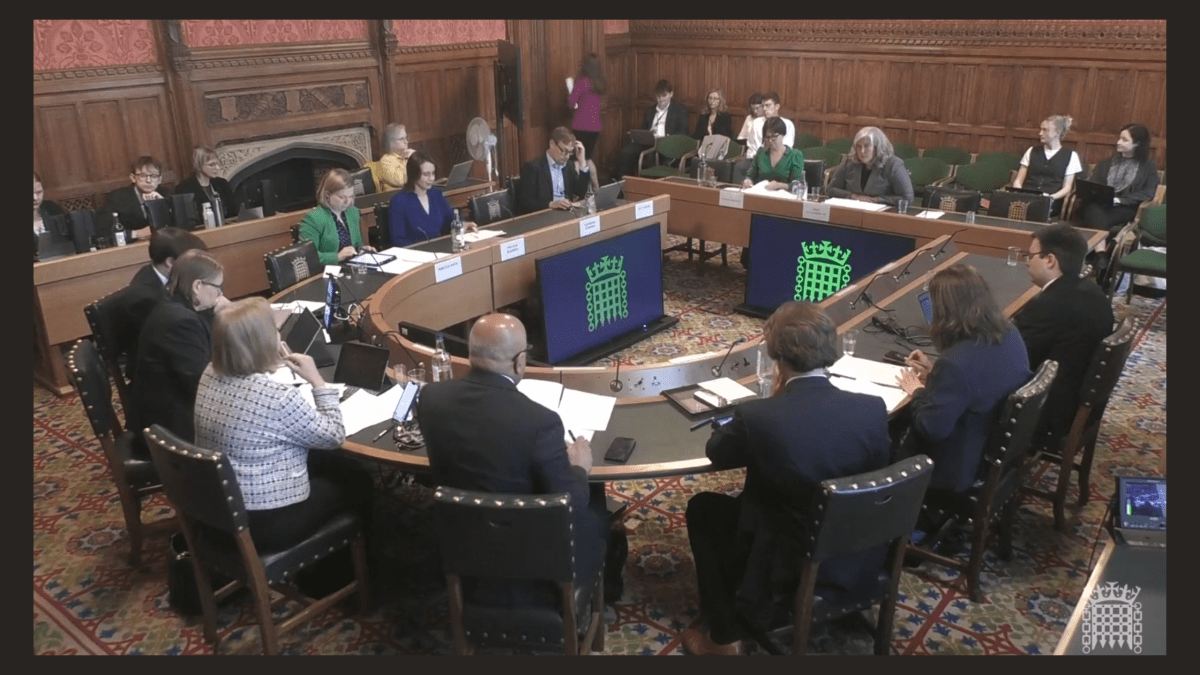
The second is to the Transport Committee, to hold a dedicated hearing as soon as possible on transport accessibility, challenging ministers on all areas of the plans for Great British Railways.

The third is to call on all charities, trade unions, transport and equality bodies to make the strongest possible challenge on this issue and get all accessibility duties back into Great British Railways. Disabled people are currently facing overwhelming attacks on their rights from all directions, so solidarity efforts should be made by all third-sector organisations representing passenger rights in transport.


References

[1] The DfT has said only that it has ‘approached the Law Commission’ on the possibility of a legislative review. However, the primary legislation for Great British Railways is being written right now, including the total reform of the Office of Rail and Road (ORR). There is also a serious red flag in its comment that regulation should be ‘efficient, proportionate and support growth.’ See Transport Committee, Response to Transport Minister (11 June 2025).

[2] Transport Committee, ‘Access Denied: MPs call for overhaul of laws, strategy and attitudes..’ (20 March 2025).

[3] House of Commons, Government response (13 June 2025); Transport Committee, Response to Transport Minister (11 June 2025).

[4] Transport Committee, Government pledges to review accessibility laws but its response to scale of failings ‘lacks urgency’ (13 June 2025).

[5] ABC, ‘Dept for Transport drops main public interest duties from GBR’ (24 Feb 2025). The public interest duties were previously commitments of the 2021 GBR White Paper, the 2022 consultation, the 2024 outcome to that consultation, and the 2024 draft rail reform bill of the previous government (Schedule 1, sec 4).

[6] The 2021 White Paper proposed that all funding pots for accessibility improvements would be consolidated into a single fund, including Access for All, the Stations Improvement Fund and the Customer and Communities Improvement Fund. (p 75).

[7] A National Accessible Travel Policy was proposed in 2022. However, this was dropped in 2024, probably due to the restrictions of competition law on train operator collaboration, such as commercial confidentiality and rules against ‘collaboration’, which is seen as an ‘anti-competitive practice’.

[8] The commitment to expand the role of DPTAC was proposed in 2022, making it into the draft rail reform legislation of 2024 (sec 11).

[9] Proposed in 2024.

[10] A proposal running from 2021 – 2024, the National Rail Accessibility Strategy consultation was on the verge of release several times in the years 2022 – 2023, being interrupted by the 2023 attempt to close every ticket office in England.

[11] Equality and Human Rights Commission, Watchdog publishes three-year plan to tackle key equality and human rights issues in Britain (Press Release: 26 March 2025)

[12] Equality and Human Rights Commission, Response to the Office of Rail and Road consultation on improving assisted travel (March 2019).

[13] ABC, Govia Thameslink Railway admits it is in breach of equality law (31 Aug 2022). ABC, Six train operators ‘in breach of legal requirements’ due to discriminatory staffing policies (22 Nov 2022).

[14] The Guardian, UK train companies could have to pay disabled passengers more compensation (18 May 2025).

[15] UNCRPD, Art 4(1)(a-i).

[16] ICESCR Art 2(1), UNCRPD Art 4(2),

[17] State obligations under Art 31 (Statistics and Data Collection); and Art 33 (National Implementation and Monitoring).

[18] Disabled Persons Transport Advisory Committee, DPTAC reference frame: working towards a fully accessible railway (14 Feb 2022).

[19] In 2024, the previous government concluded it was impossible even to make minor exemptions to the Competition Act 1998, preventing proper collaboration or co-ordination of cross-network functions. Department for Transport, Government response to GBR consultation (Feb 2024) p. 57 -59.

[20] Proven via FOI requests. See ABC Parliamentary Briefing (23 May 2025), direct download.


Open Access Crisis: Great British Railways and East Coast Main Line under threat

Private ‘open access’ train operators are creating a crisis for the entire railway – threatening billions of taxpayers’ money, as well as timetable planning and operational performance on the East Coast Main Line.

This is due to unprecedented numbers of open access applications and aggressive lobbying attempts from private companies like First and Arriva, which are trying to take advantage of profit-friendly conditions by forcing through new contracts before the railway is brought into public ownership.[1]

The entire railway’s timetable is now at risk, with Network Rail making ‘Formal Declarations of Congested Infrastructure’ on the East Coast Main Line (ECML), warning that there will be severe repercussions for passengers if any more applications are signed off.[2]

However, the rail regulator Office of Rail and Road (ORR) has completely ignored these warnings and is still pressuring Network Rail to support applications, creating a major stand-off between the two public bodies.[3] It has already signed off one ECML open access contract extension until 2038, locking in the taxpayer for a further ten years. The application, from Grand Central Trains/Arriva, was signed off by the ORR in the space of one day, without government approval, and without even conducting a value for money test.[4]

The Department for Transport (DfT) is failing to step in to prevent this pending crisis, and concealing vital cost impact assessments on open access, including evidence it will waste billions of taxpayers’ money over the next decade if it continues- over £1.1 billion on the ECML alone.[5]

This report on the Open Access Crisis demands that the ORR immediately stops processing applications, and DfT completely repeals all open access/competition law from the future Great British Railways (GBR).

Threat to the taxpayer

The ORR has also ignored several strong warnings from the Department for Transport (DfT) on the economic threats posed by open access. In January, the Transport Minister wrote a formal letter warning of the threats posed to the value of public money, followed by an objection in February to eight out of nine open access applications.[6]The DfT then made clear in its February consultation on new primary legislation for Great British Railways that it considers the current ‘access and use’ policies completely discredited, emphasising the failures on the ECML.[7] In that consultation, the DfT stated it would only acknowledge access arrangements until 2029, a deadline ORR immediately breached by signing off the ten-year extension for Grand Central Trains. In March, Network Rail made its strongest possible objection with the ‘Formal Declarations’, and in April, the publicly-owned operator LNER produced a report finding that continuing with open access on the ECML could waste over £1.1 billion over the next decade.

The economic dangers of open access are beyond dispute. 1) Value Abstraction: operators compete directly with publicly funded operators for fares, with ORR currently signing off contracts according to a test that allows up to 70% of the revenue of a new open access service to be abstracted from existing services.[8] 2) Wasted Subsidy: open access operators get further ‘indirect subsidies’ because they do not cover the costs of infrastructure and other central support services provided by the railway. The Minister for Transport herself recently complained that ‘taxpayers are left to fill the shortfalls.’ 3) Undermining the value of public investment: for example, in infrastructure improvements and new rolling stock. The government stated in its February consultation that the long-delayed ECML timetable change is responsible for undermining the value of £4 billion investment.

Office of Rail and Road working against the public interest

As Britain’s rail regulator, the ORR is supposed to protect safety, passenger rights and the value of public money. Yet, despite being fully informed of the dangers to rail performance and economy, it is still pushing the agenda of private companies – even against the objections of Network Rail and the government itself. The current regulatory framework and economic role of the ORR has collapsed in this unprecedented situation, where, in the context of aggressive lobbying and legal threats from private companies, it is now making decisions that go actively against the public interest.

The ultimate cause of all these issues is competition law, which creates severe restrictions on taxpayer value, rail integration and the socioeconomic/public interest. Under the current rules, the ORR’s role is overbalanced by its ‘competition duty’, which actively prevents it from favouring the public interest in its decisions as this would be seen as ‘prejudice’ and ‘discrimination’ against the interests of private companies. This includes a duty not to impose ‘unreasonable costs’ on train operators which filters through to all of ORR’s other regulatory functions.

These restrictions run throughout the Railways Act 1993, including the Competition Act 1998, the Access and Use Regulations 2016, the competition function of the ORR, and the role of the Competition and Markets Authority (CMA). Currently, the DfT intends to continue with all of these restrictions in some form, which creates the biggest threat of all – to Great British Railways and the long-term future of the railway.

Threat to Great British Railways

The DfT is currently drafting the legislation for Great British Railways (GBR), the new public body that is supposed to integrate the railway’s entire Profit and Loss accounts – over £12 billion per year of taxpayers’ money. Yet, in February, it dropped its longstanding ‘socioeconomic duty’ from the plan, thought by the previous government to be a key factor in protecting the value of public funding. Central commitments to accessibility and environment were also dropped, replaced by a ‘streamlined’, competition-friendly model.[9]  DfT has provided no economic justification for its proposal and is currently concealing all cost impact assessments and organisational design plans for GBR, leaving the details to be fought out behind closed doors. The ultimate prize for the private companies like First and Arriva is a competition-friendly organisational design for GBR and strengthened competition regulation in the new system.[10]

It is fundamentally impossible to protect the value of public money while also protecting the ‘rights’ of private companies to profit. Currently, this perverse principle applies to every part of the railway’s decision-making, including Network Rail’s. If retained, competition restrictions would even apply to the timetabling decisions of the future GBR; with ORR able to overturn decisions if it thinks GBR is favouring the public interest and ‘discriminating’ against private companies.

A fragmented financial framework restricting taxpayer value

While competition duties remain, it will be necessary to separate financial accounts between infrastructure and operations, including severe restrictions on cross-subsidy, meaning GBR cannot make use of its own profits to fund and grow other areas of the network. This also means that the separated parts of GBR would be limited from collaborating with each other, and under strict conditions of commercial confidentiality even between the publicly-owned companies, since this would otherwise be seen as ‘market dominance’ and ‘anti-competitive’ behaviour.

If private companies get their way, we will see – a split between GBR’s infrastructure and operational arms; as well as a three-way split in its ticket retail functions between the main GBR body, a GBR ticket retail arm, and a further split of the third-party ‘licensing’ function. Lobbyists are even demanding that the ticket retail licensing function moves from the Rail Delivery Group to the ORR, which would collapse its public interest duties even further.

Demanding the repeal of all competition clauses

Any presence of an ‘open access’ market for rail in the future GBR – even just 1% of services – will restrict timetable integration and limit socioeconomic value for the entire railway. Competition law restrictions would cause disproportionate damage to the new public body before it has even begun, because its fundamental organisational design will be structured to favour the ‘equality’ of private companies. This is undoubtedly the reason that the DfT dropped socioeconomic, accessibility and environment duties from the new GBR proposal – in fact, this competition vs socioeconomic conflict has been the central obstacle to rail reform since the original GBR White Paper of May 2021.

The only way to achieve an integrated railway is the repeal of all competition clauses from rail legislation and the removal of the competition function of the ORR. The ORR must be reformed as a fully ‘public interest’ regulator, responsible only for: safety, accessibility, passenger rights and rail performance.


[1] There are currently 13 open access applications awaiting a decision from the ORR, with the latest bid submitted by First Group just last week (6 June 2025).

[2] On 14 March 2025, Network Rail made three ‘Formal Declarations of Congested Infrastructure’ on the ECML, available to view here; and a ‘General Representation on the ECML’ to ORR, which predicts dire performance outcomes for the ECML even without the additional open access applications.

[3] See the full record of correspondence from 24 April 2024, on the ORR webpage: ‘Competing track access applications: Information on how competing and complex applications for the Dec 2024, May 2025 and December 2025 timetable changes will be considered.’

[4] Ignoring Network Rail’s warnings, on March 26, ORR approved Grand Central’s application for a ten-year extension of its current contract until 2038 – speeding this through in the space of one day without even performing a value for money test. The DfT had stated in its February consultation on Great British Railways that it would honour open access agreements only until 2029. (GBR consultation, p 29, para 3.31).

[5] The report “Impact of Open Access Operations on LNER” (10 April 2025) is being withheld by the government, despite being demanded in parliament and exposed in the Sunday Times.

[6] DfT, ‘Secretary of State for Transport’s expectations for how open access will operate’ (6 Jan 2025); Rail Magazine, ‘DfT opposes eight out of nine open access applications citing revenue and performance concerns’ (10 Feb 2025).

[7] DfT, GBR consultation document (18 Feb 2025). See pages 24 – 32.

[8] ORR, Summary guidance on rail open access applications (2 Dec 2024).

[9] ABC, DfT drops main public interest duties from GBR (24 Feb 2025); ABC, GBR under threat from Private Companies: Part One (16 May 2025).

[10] ABC Parliamentary Briefing (23 May 2025), direct download.

Great British Railways Under Threat from Private Companies: Part One

New evidence reveals that Tory Task force Great British Railways Transition Team (GBRTT) remained the main advisor to the Department for Transport on rail reform until March this year, giving extensive input into designing the structure of the new public body.

Official advice reports on ‘GBR Organisational Design’ were submitted to ministers as recently as November and December 2024, influencing the government’s decision to abandon GBR’s longstanding socioeconomic, accessibility and environment duties, and shift to a new ‘streamlined model’.[1]

There is also concerning evidence of corporate capture of parts of GBRTT, with ‘Rail Partners’ (transport owning groups First, Arriva, Transport UK and the Rail Delivery Group) operating deep inside the task force and even co-authoring official policy advice to ministers until at least late 2023. Their involvement continued until this year, including a significant role developing ‘passenger revenue growth strategies’. Though Rail Partners itself was wound down last month, the Rail Delivery Group, run by the very same owning groups, now continues this work.[2]

This report is the first in a series explaining the crisis behind GBR’s organisational design – and the dangers presented by the aggressive lobbying of private companies. The standoff between corporate and public interests is now at peak threat level, and the only way to solve it is the complete repeal of competition law from rail legislation.

GBR Organisational Design – what is the Department for Transport hiding?

GBR Organisational Design means deciding the financial framework for combining the Profit and Loss accounts of the entire railway – over £12 billion per year of taxpayers money. The upcoming Railways Bill will establish this framework and a consultation has just taken place on the legislation. However, the government’s new proposal for GBR was revealed in February to have dropped its longstanding socioeconomic duties for the sake of a new ‘streamlined model’. No cost impact assessment was published with the consultation, and no explanation given for the radical shift in direction.[3]

So, why is GBR’s Organisational Design so controversial that it needs to be hidden from the public? The answer is the railway’s biggest taboo – the restrictions of competition law on the interests of passengers and taxpayers.

Competition Vs Public Interest: Impact on passengers

Competition law conflicts have been the main impediment to rail integration since the 2021 White Paper of the previous government. This continues to be the case because the DfT is trying to reconcile two completely opposing objectives: integrating the railway; and stimulating competition for private companies.

The reason that rail integration and public interest aspects of GBR have repeatedly been found to be impossible is because under competition requirements, GBR is considered a ‘market participant’. This puts it under a complex web of legal duties not to provide additional economic benefits to the public beyond those that can be accessed by private companies.[4] This fundamental constraint still applies, despite the move towards public ownership and the change of government.

The new proposal of a ‘streamlined GBR’ should be seen as a competition-friendly model that leaves room for private companies to fight out the details later. The following ticket retail and cross-sector passenger services are currently under threat:

  1. Integrated GBR ticket retail platform

Integrated ticket retail is impossible while the government keeps up its objective of ‘stimulating competition in the third-party retail market.’ The previous government dropped this idea entirely because it would have meant the financial separation of its rail and ticket retail arms.

Claims by the government that it will create a ‘government-backed’ app should be treated with scepticism. In fact, the influence of competition law means GBR will have to be designed according to at least some level of internal division between its railway and ticket retail arms. Under the restrictions imposed by the Competition Act 1998, this would mean in the best-case scenario a divided structure unable to integrate fare and ticketing policies or cross-subsidise its operations. In the worst-case scenario, the combination of industry lobbying and competition law restrictions could even open the door to a public-private partnership as GBR’s ticket retail arm.

The loss of integrated ticket retail is now a clear and present danger, with the ‘Independent Rail Retailers’, an entity set up to lobby on GBR third party retail reform, demanding the full separation of GBR’s retail activities, additional controls on cross-subsidy and a stronger role for the Competition and Markets Authority.[5] It is now being widely reported that both the IRR and its biggest member, Trainline, are ramping up their lobbying efforts.

2. Rail Delivery Group dominating ticket retail and rail accessibility

The removal of the Rail Delivery Group was the first priority of the 2021 White Paper on GBR, due to it being named as a major cause of market failure and perverse incentives. In fact, the absorption of the RDG’s cross-sector passenger functions was so much a priority for the previous government that it was the GBRRT’s entire first year workstream. This was suddenly abandoned in June 2022, with no explanation ever given to the public.[6] Meanwhile the Rail Delivery Group has become more powerful than ever and remains in place of the entire country’s ticket retail system and many other ‘cross-sector passenger functions’, including multi-million pound network-wide projects such as ticketless travel and assistance infrastructure for disabled travellers.[7]

Competition-based conflicts are the cause of the RDG remaining lodged in place and make its removal extremely difficult for the government. For example, under the original plan, collaboration between train operators was supposed to be enabled by carefully legislated ‘exemptions’ to competition law. However, the previous government found even the most limited exemptions impossible due the effect of the Competition Act 1998, which tightly controls any collaboration within competitive markets.[8] In the current context, these restrictions impede even the publicly owned operators collaborating even with each other, lest they gain an advantage over private companies.

Furthermore, the responsibility of licensing the third-party ticket retail market cannot lie with either GBR or a hypothetical separated GBR retail arm, since under competition law, this would be seen as risking prejudice towards the interests of passengers and taxpayers, thus disadvantaging third party retailers.[9] Currently, the RDG remains in its licensing role to third parties, meaning it has now become entrenched as both gatekeeper and dominator of the third-party retail market.

3. No public consultation on fare policies or ticket retail

Due to the commercial confidentiality demanded by transport owning groups and the RDG, there has been no consultation on fares or ticket retail policy since 2019, which never reported back to the public. In fact, all cross sector passenger functions have been exempted from consultation throughout many years of rail reform for this reason.[10] Our new evidence proves that the development of fare and ticket growth strategies and policy has been, and continues to be, entirely within the domain of the owning groups and RDG.

With the highest rail fares in Europe, fare and ticketing policies should be considered a priority matter by the DfT. Instead, this issue has been buried for years, and if a competition-based retail model is established, we can expect there to be significant constraints on synchronising fares and ticketing with public policy. Integration will be seen, inherently, as a ‘conflict of interest’ that could discriminate against private companies and therefore creates a ‘chilling effect’ on the new laws and regulation because GBR will have to be carefully designed to avoid legal challenge.

Part Two: Impact on taxpayers

The next part of this series will focus on the impact of competition law and industry lobbying on taxpayers, and will dispatch further evidence warning of the potential outcomes if GBR is allowed to be captured by corporations.

The restrictions of competition law are the biggest obstacle to rail integration and the public/socioeconomic interest. The only solution is the full repeal of all competition clauses from rail legislation, and the removal of the role of the Competition and Markets Authority and competition duties of the Office of Rail and Road.


References

[1] The Rail Minister Lord Peter Hendy has been receiving the same high-level policy advice he had previously signed off on as Chair of Network Rail, while ‘Shadow GBR’, established by the current government in October, has remained barely operational. See Transport Committee, Oral evidence: Shadow Great British Railways, HC 554 and The Times, ‘No minutes from ‘robust’ meetings to create Great British Railways’ (26 Jan 2025).

[2] In addition to its control of the UK’s entire ticket retail system, ‘National Rail’, the Rail Delivery Group is developing and enacting Railway Policy and Strategy, including decarbonisation, stations, network planning, accessibility technologies and workforce reform. (Confirmed via FOI request).

[3] The reports on GBR organisational design were withheld from release by ministerial veto. Other FOI requests show that the DfT is holding back economic and cost modelling it has conducted on the plans, and the Sunday Telegraph recently reported that the DfT has received a report finding that private ‘open access’ operators on the network could cost the taxpayer billions over the next decade.

[4] See Competition and Markets Authority (CMA) response to GBR consultation (April 2025); CMA response to GBR consultation (Aug 2022); ORR response to GBR consultation (July 2022).

[5] Railway Gazette, ‘Rail ticket retailers call for a level playing field’ (8 May 2025).

[6] Confirmed by FOI requests. See also ORR Meeting Minutes, (June 2022).

[7] Despite delivering ‘public functions’ and developing and enacting public policy, RDG is unregulated by the ORR, has no requirement to consult passengers on retail and assistance reform, and is not subject to the Public Sector Equality Duty.

[8] DfT, Plan for Rail consultation outcome (Feb 2024), page 57.

[9] DfT, A railway fit for the future, GBR consultation (Feb 2025), pages 37-38.

[10] ABC, The Great British Cover-Up (July 2022); ABC, The Great British Rip-Off: Why the Williams-Shapps Plan will fail to deliver (Aug 2022).

Demanding public interest duties at the core of new rail legislation

The landmark consultation on the primary legislation for Great British Railways closes tonight and we have responded to strongly object to the government’s abandoning of the public interest duties previously at the core of the plan.

This post includes a consultation response that argues for the full benefits of public ownership, based on the founding principle of “maximising social and economic value” – which must be enshrined at the heart of the new primary legislation and synchronised across the regulatory system.

If you would like to support our call for an equality, human rights and climate framework for the railway, please email Railreform.bill@dft.gov.uk including the text from this post.

Our consultation response on primary legislation for GBR

  1. Objection and demand for public interest duties (questions 1 and 2)

We disagree and strongly object to questions (1) and (2), which suggest that a stripped-down, deregulated model of Great British Railways has already been pre-decided (especially in light of section 1.20-1.24). An overarching duty to ‘maximise social and economic value’ and duties towards accessibility and environment were the main commitments of the previous government’s legislative plan. However, this consultation removes any mention they ever existed, meaning that it has been impossible for the public to give input, despite the strong and well-documented support these duties previously received.

Nor has this major change been so much as explained to the public, despite two months of passenger campaigning and two major interventions from the Transport Committee. The missing socioeconomic duty is a particular taboo, and a recent public letter from the Rail Minister Peter Hendy evaded any mention of this previously foundational principle of GBR.

What should be most worrying to the government and Treasury is that no cost impact assessment has been published to support these plans, meaning there is currently no economic rationale whatsoever to support this new, deregulated approach. What is being legislated for here is the combining of Profit and Loss accounts for the entire railway, meaning that every aspect of these decisions affects taxpayer value. The socioeconomic duty was included in the Conservatives’ draft legislation precisely because it maximised value for the taxpayer. It is therefore completely untenable to go forward with any decisions on draft legislation until it is proven that the government has found the best approach to capturing the socioeconomic value of the railway – for every region and demographic.

Demand: The socioeconomic duty must be at the centre of GBR primary legislation and synchronised across all regulatory functions of the Office of Rail and Road (ORR). This is the best possible way to incentivise government investment in rail for the long-term; as well as to preserve the railway from fragmentation and corporate capture, which could otherwise lead to re-privatisation under a future government.

This foundational socioeconomic duty must be paired with strong statutory duties on accessibility and environment, as the best possible approach to incentivising investment and long-term action plans in these areas. As expressed in the Transport Committee’s recent report, rail accessibility is the most urgent human rights issue in transport today; and the urgency of modal shift from cars to public transport is the most important climate goal in Britain.

Finally, and perhaps most importantly, the government must make the strongest possible legislative amendments to repeal competition law in rail. There are many blocks to integration and dangers of further fragmentation remaining in this current proposal and with absolutely no justification. For example, why should ORR keep competition as its primary factor in decision making when just 1% of the network is open access? This blocks integration and prevents the regulator acting in the public interest. Rather, we need ORR to have safety, accessibility, and socioeconomic value as its only decision-making factors. This can only be achieved if its competition duty is replaced with a socioeconomic duty – as the government well knows, these two aspects of regulation cannot exist in the same space.

It is especially ironic that rail industry lobbyists seek to claim that this stripped-down version of GBR is all about ‘performance’. It is not. In fact, the real boost for performance would be found in removing the interference of ‘competition regulation’ and replacing it with proper integration and planning in the public interest. This is undoubtedly the way to create the strongest possible socioeconomic duty and ensure this empowers other public interest duties, especially accessibility and environment. It provides the maximum possible incentive for investment in all these areas, and for all future governments.

2. Objection to the exclusion of passengers and disabled people from the consultation (all questions)

Due to restrictions caused by competition law, commercial confidentiality, and the influence of industry lobbying, passenger issues have not been consulted on since the 2019 Pay As You Go rail consultation. The results of this consultation were never reported back on due to the continued dominance of the ticketing and fares system by transport corporations, in the guise of the ‘Rail Delivery Group’. Following this, the 2022 consultation on GBR primary legislation actively exempted passenger-facing issues from consultation. This was for reasons of ‘commercial confidentiality’ and to placate industry demands to negotiate all these areas in a private ‘market engagement exercise’. To date, that process has continued and despite the urgency of removing the Rail Delivery Group stated by the previous government, it has remained and seems to be getting more powerful than ever, taking on new network-wide projects all the time, such as ‘ticketless travel trials’ and accessibility technologies such as ‘Welcome Points’ and apps.

The repeal and removal of the effect of competition law in this space must have the removal of the Rail Delivery Group as its main priority. This unregulated and secretive entity is currently in control of all cross-network passenger facing services, and worse still, the government is now seeking to create further competition, and therefore fragmentation, in the retail space. The conflicts of interest created by this approach have already lost us the opportunity of a single, integrated ticketing app for GBR – this must be legislated for and restored to the plan. This is the only way to enable proper integrated ticketing and fares policies, and open the possibility of multi-modal ticketing and travel. The only interests that should be balanced in this area are the public and socioeconomic interest, and the interests of devolved regions in creating their own multi-modal transport systems.

Disabled people have been most betrayed of all by this consultation. National Rail Accessibility Strategy and National Accessible Travel Policy consultations had been promised for years, as well as statutory duties in GBR for: the Disabled Persons Transport Advisory Committee (DPTAC) to have an advisory role; requirements to consult disabled people; and the unification of infrastructure investment into a single, rationalised fund for the fastest possible progress towards full rail infrastructure accessibility.

We therefore demand, in line with the recent Transport Committee report, that the government consults on and creates an urgent National Action Plan for rail accessibility in advance of any draft legislation. This should be paired with input into how to create the best possible legislative model to enable: 1) the civil right to Turn Up And Go; and 2) compliance deadlines for infrastructure accessibility in primary legislation.

Final Comment

Please accept these comments as our contribution to this landmark consultation, and do not deny the public and taxpayers the chance of reaping the full socioeconomic benefits of public ownership.

Please also note the contents of our 2022 publications on the previous GBR consultation, which predicted all the difficulties with the socioeconomic duty, competition law and industry lobbying that have now come to pass:

ABC, ‘The Great British Rip Off: Why the Williams-Shapps Plan will fail to deliver’ (August 2022)

ABC, ‘The Great British Cover-Up: What Grant Shapps is hiding about the future of the railways (July 2022)

‘Ticket Office Cuts Round Two’ – UK and Scottish governments revive Tory plans

Industry sources warn that ‘Ticket Office Cuts Round Two’ is about to begin – starting with Scotrail, and ongoing stealth cuts on Southeastern and Great Western Railway (GWR). Currently, ‘all eyes are on Scotrail and Southeastern to see if they get away with it’ and if these operators succeed, similar stealth destaffing tactics will spread across the rest of Britain.

The UK and Scottish governments are directing these cuts, working together to push forward a Tory agenda first hatched in early 2022 as a ‘Plan B’ for ticket office closures. The Department for Transport (DfT) has been waiting to restart its Plan B since the collapse of its 2023 ticket office consultation, but had held back due to the level of public outrage at the time. Around Oct-Nov 2024, this agenda was restarted by the UK Labour government, which is now working with Transport Scotland to enact the Tory plans.

Our new data project proves that Scotrail is about to deregulate ticket office staffing hours at a total of 96 stations, despite publicly claiming only 31. Great Western Railway (GWR) has already completed a program of cuts at 39 stations in total secrecy, with further cuts pending. Meanwhile, Southeastern’s plans for severe cuts at 14 stations have been paused since being exposed on this website in Nov 2024, and are still awaiting a decision from the Department for Transport.

The fact that the first ‘test’ operators to try these new stealth tactics stretch across both England and Scotland, and both privately and publicly owned operators is proof in itself that this has been planned and coordinated across the entire railway. This can only be on the orders of the UK Department for Transport and with the complicity of the Scottish government.

The following report is based on months of research and freedom of information requests, as well as in-depth correspondence with Scotrail. Both the DfT and Transport Scotland declined to comment, but did not deny the allegations.

What is stealth deregulation?

The new stealth plans are based on manipulation of ‘Schedule 17’ of the Ticketing and Settlement Agreement (TSA) – one of the main issues that brought down the 2023 consultation on ticket offices due to legal threats. We call this stealth destaffing / stealth deregulation, because Schedule 17, the obligation to staff ticket offices, is the only way that any staffing hours are regulated. Therefore, when staffing hours are reduced under this system, those hours are permanently deregulated – meaning that both operator and Transport Ministry shed any duty to consult on future staff cuts.

Each of the three train operators we’ve investigated deny these staffing hours are being lost, and claim they have guaranteed station staffing to replace lost ticket office hours. However, their rebuttals only prove our point because promises of this kind can only be based on yearly business planning or trade union agreements – both of which are time limited and obviously no substitute for permanent regulatory constraints.

This report explains the stealth tactics and regulatory manipulation used by at least three train operators so far. The examples should be used to pre-empt the DfT’s next attempts at stealth destaffing, which are likely to use the Schedule 17 ‘Minor Change Process’ currently being exploited by GWR and Southeastern.

Scotrail’s manipulation of Schedule 17 ‘Major Change Process’

Scotrail has just announced it will enact a program of cuts to ticket office staffing hours, implying this will happen at just 31 stations. Our research proves this a misleading claim – the true figure where hours are being deregulated being 96 stations. It appears that this is being done by many small cuts to ‘shave’ hours from opening and closing times; however, Scotrail has obscured the data to such an extent that it is impossible to know the severity of the cuts. Scotrail refuses to provide this figure, but does not deny RMT’s estimate that this amounts to 2,800 ticket office staffing hours withdrawn per week.[1]

In Scotrail’s case, it is using the results of a Feb 2022 ‘Schedule 17’ consultation held while the operator was under private ownership, just before renationalisation that April when it became the direct responsibility of Transport Scotland. The operator is therefore relying on a consultation that is three years out of date and was strongly opposed by the Scottish public, the government having suspended those plans until they were quietly restarted in Nov 2024. Our investigation has also concluded that there was no Equality Impact Assessment (EqIA) until late last year, meaning that Scotrail’s recently published EqIA has been retrospectively applied to plans made almost three years ago.[2]

GWR’s manipulation of Schedule 17 ‘Minor Change Process’

GWR was one of the original ‘test projects’ of the Plan B for ticket office cuts using the Minor Change Process to enact a program of stealth cuts at 39 stations between 2022 and late 2024. Whereas Scotrail’s cuts have relied on a public consultation (the ‘Major Change Process’), under the Minor Change Process ticket office hours can be reduced without consultation, or any transparency whatsoever. It is in this way that the DfT’s ‘Plan B’ for ticket office cuts is supposed to proceed, ‘shaving hours’ in as many areas as possible, and leading incrementally to full closures.

GWR’s stealth plan was hatched in June 2022, leading to cuts at 39 stations to date. Our FOI requests and data analysis prove that this amounted to 344 ticket office staffing hours cut per week. Most of these were the ‘shaving’ of an hour or two from morning and afternoon/evening staffing hours, however 17 of these stations were single-staffed, potentially causing severe impacts. All 39 cuts have now been enacted and most would have taken place in 2022-2023, though some as late as Dec 2024, GWR refusing to confirm the exact dates. No Equality Impact Assessment was conducted at any point.[3]

Southeastern’s manipulation of Schedule 17 ‘Minor Change Process’

Southeastern was the very first test project of the Tory ‘Plan B’ for ticket offices, which began in January 2022 with a ‘Minor Change Notice’ for severe cuts at 14 stations – in the worst cases up to 50% of opening hours. Our data analysis proves this to be a total withdrawal of 555 hours per week.

Southeastern’s program of stealth cuts began in October 2024 but was paused in November after being exposed on this website. Only two of the 14 cuts have taken place so far, while the other twelve are paused awaiting a decision from the DfT.

Urgent warning from industry sources of further cuts

We have tracked the DfT’s stealth plans for ticket office cuts since 2022, and know that they have been waiting to begin Plan B since the scandalous collapse of ticket office closure consultations 18 months ago. Our sources confirm that this back up plan has now begun, urging us to warn passengers – especially disabled passengers – before ‘Ticket Office Cuts Round Two’ begins.


[1] The RMT estimates that the Scotrail cuts amount to 2,800 ticket office staffing hours removed per week. Scotrail has not disputed this figure. For the evidence behind our claim that 96 stations will be partially deregulated via Schedule 17, click here.

[2] Scotrail’s Equality Impact Assessment (EqIA) has just been published, but we dispute the original date on the document of Dec 2022. In fact, an FOI request shows that even as of mid-2023, there had been no equality impact process. Going by the other dates shown on the new EqIA, this can only mean the first version was produced in Nov 2024. Scotrail has not responded on this point, except to say: “With regard to ScotRail’s requirements under the Public Sector Equality Duty (PSED), ScotRail is content that it has undertaken an EQIA at the appropriate points. ScotRail reject any characterisation of our approach as being procedurally defective at any point.”

Scotrail also disputes our point about deregulation and “does not recognise the characterisation of ‘deregulation’ referred to nor that requirements for future consultation have been dispensed with.” Though we acknowledge that regulatory regimes in Scotland are generally superior to England, this does not change our position – the regulatory requirement to consult has been lost for those hours because those are the rules under Schedule 17 for all ticket offices in Britain.

[3] GWR admits the cuts but says ‘this is not reflective of total station staffing and opening hours; and all changes were consulted on and communicated [in 2022], as per our regulatory requirements.’ However, it did not provide any evidence for the latter claim except to say this was ‘communicated through posters at the stations concerned.’ GWR says that commitments have been kept at all 39 locations on staffing, however, this makes no difference to the stealth deregulation point, which means staffing levels for those hours are not secured in any way for the future. Full data evidence of the GWR cuts, including the ‘Ten Worst Affected Stations’ can be downloaded here. The original June 2022 ‘Minor Change Notice’ for the cuts can be downloaded here.


For more information: contact@abcommuters.com

*This blog has been edited since publication to add further data evidence on the Southeastern cuts.

New Campaign: Ministers must restore public interest duties to Great British Railways consultation

The Association of British Commuters, Disabled People Against Cuts, National Pensioners Convention, and National Federation of the Blind of the UK have made their first challenge to the Secretary of State for Transport on the missing public interest duties from Great British Railways.

Four urgent demands were made in a letter dispatched on Wednesday:

  1. Extend the Great British Railways consultation deadline to 12 weeks, with a significant outreach program to explain the impact of proposals on passengers, taxpayers, disabled people and all protected groups.
  2. Provide accessibility and equality measures to ensure the widest possible participation of the 16 million disabled people in the UK.
  3. Publish the cost impact assessment immediately, as is standard with such important consultations. This must show how the Department considered its Public Sector Equality Duty, since all accessibility commitments have been dropped from the new plan.
  4. Restore questions on public interest duties and GBR’s founding purpose, including the previous government’s commitments to “maximise social and economic value” and consider accessibility and environment in all decisions.

Since our letter was sent, an article in Disability News Service has confirmed that the Department for Transport (DfT) has no intention of consulting on public interest duties at any point in the GBR legislative process. Our demands could not be more urgent – if the duties are not restored to the consultation now, they will be excluded from Great British Railways legislation altogether.

Why the future of accessibility depends on GBR public interest duties

  1. Consulting on the accessibility duty is a chance to put civil rights such as Turn Up And Go at the heart of the GBR Licence, or even the new primary legislation itself.
  2. In conjunction with the overarching socioeconomic duty, the accessibility duty could lead directly to national action plans and compliance deadlines for full infrastructure accessibility – the ‘holy grail’ of accessible transport.
  3. A GBR with strong public interest duties would have to take over all ticket retail and accessibility areas currently controlled by the Rail Delivery Group, which has long been developing key accessibility technologies outside any sort of consultation, regulation or equality due process.
  4. Strong accessibility duties throughout GBR would entail comprehensive regulation of accessibility – which must be a rights-based model much closer to how safety is treated by the railway. Currently, plans for regulation are vague and confused, with no clarity on whether the rail regulator, ORR will remain responsible, or whether this will be passed off to ‘passenger watchdog’ Transport Focus.

There can be no doubt of the public’s strength of feeling on these matters. The Minister for Transport must turn back from this new idea of a stripped down, deregulated GBR, and must not sacrifice the chance to create a proper equality, human rights, and climate framework for the railway.


For more information: contact@abcommuters.com

Dept for Transport drops main public interest duties from GBR, in major step back for accessibility and environment

Last week, the Department for Transport (DfT) launched a consultation on the legislation for Great British Railways (GBR). It has since become clear that the DfT dropped GBR’s headline ‘public interest duties’ from the plan – a major setback for socioeconomic value, accessibility, and environment.

The following explains why the Secretary of State for Transport must take control and immediately restore all public interest duties to the GBR consultation. As the most important rail consultation since privatisation, it must also be extended to at least 12 weeks to give any chance of a meaningful public response.

An ‘overarching’ public interest duty to ‘maximise social and economic value’.

The headline promise of the previous government was that Great British Railways (GBR) would be ‘a guiding mind…responsible for running the railways safely and efficiently to maximise social and economic value.’  This ‘overarching’ ‘public interest duty’ was to be set out in the GBR Licence, alongside other core duties towards accessibility and environment, all monitored and enforced by the Office of Rail and Road (ORR). It was a headline commitment from the 2021 White Paper on GBR until the Feb 2024 Plan for Rail.

Responses to the last GBR consultation showed the public interest duties were ‘widely welcomed’ and ‘the duty for accessibility in particular was strongly welcomed’ by the public. Therefore, in 2024, these commitments were strengthened even further; in recognition of ‘the critical importance of an accessibility duty within the licence’ over and above existing obligations in the Public Sector Equality Duty and Human Rights Act 1998, to ‘ensure that GBR puts accessibility at the core of its strategic decisions.

Why is the Labour Government going in the opposite direction?

The new GBR consultation picks up where the previous government’s Plan left off – except there is no mention that the headline public interest duties ever existed, let alone that they received such widespread support from the public. The DfT now appears to be going in the opposite direction, with the new consultation stating that “GBR will…be subject to a substantively streamlined and simplified licence” under “a guiding principle…focused on the minimum viable set of conditions that are required for safety, performance (i.e. reliability and cancellations), efficiency, and passenger experience…. substantially reducing the regulatory burden.”

Accessibility is hit the hardest by these new plans, where the government has dropped several other key pledges: for the Disabled Persons Transport Committee (DPTAC) to become a statutory advisor to GBR; as well as “a condition in the…licence to require GBR to consult with disabled passengers…directly and through representative organisations.” Proposals for regulating accessibility are also extremely vague, with no clarity on whether this duty will fall to Office of Rail and Road (rail regulator), or Transport Focus (passenger watchdog).

The new GBR consultation contains no questions whatsoever on passenger experience, nor any of the transport policy issues of most concern to passengers, for example: fare reductions; ticket office closures, or disabled people’s right to ‘Turn Up And Go’. This continues the trend started by the Conservative government, which exempted all passenger issues from consultation, and failed to conduct the urgent consultations that should have come first, such as: fares and ticketing reform; the National Rail Accessibility Strategy; the National Accessible Travel Policy; and the accessibility audit of railway infrastructure. In fact, the only consultation on passenger-facing issues that has occurred in this period was the 2023 attempt to close every ticket office in England – plans that eventually collapsed due to public outrage and breaches of equality law.

In conclusion, the entire consultation document is about the technical aspects of regulation and competition law issues, making the details incomprehensible to all but those already expert in the relevant legislation. It is therefore, a consultation for industry rather than the public, with industrial and private interests sure to be the loudest voice. Most concerning of all, the sudden launch and too-short length of this consultation suggests the DfT is trying to get new primary legislation through as quickly as possible, rather than taking the time to meaningfully consult.

Urgent Demands to the DfT

  1. Currently the consultation is being held for just 8 weeks, and over the Easter holidays. This must be extended to at least 12 weeks – with significant outreach from the DfT to explain the impact of their proposals on passengers and taxpayers.
  2. The consultation was published without impact assessments, which should have accompanied the document and spelled out the thought process behind any changes. The DfT must publish these immediately, explaining the cost-benefit risks and impacts, and whether it has considered its Public Sector Equality Duty in the new plan.
  3. The DfT must restore questions on GBR’s public interest duties to the consultation and reissue the document, subject to an extended 12 week deadline. Its only reported comment on this so far is that ‘the government welcomes views on whether there should be such a duty’ – it is of course impossible for the public to give such input if there is no sign in the document that the duties ever existed.

For more information: contact@abcommuters.com

Exposed: Secret ticket office cuts begin at Southeastern, after years of stealth destaffing across the network

New documents reveal years of ‘stealth destaffing’ at Southeastern, as its network is exposed to be severely understaffed, with ticket offices meeting their scheduled hours at an average of just 74% for the last two years. It has now begun a secretive new ‘Ticket Office Project’, involving the removal of afternoon shifts, and piloting of new job roles at 14 Kent stations.

Our freedom of information requests to Southeastern show that 14 stations are due to have their ticket office opening hours cut by half: a daily loss of 6-7 hours staffing hours, for 5-7 days per week.

The stations due to lose their afternoon shifts are: Beckenham Jn*, Bexleyheath*, Hayes (Kent), Mottingham*, New Cross*, New Eltham*, Petts Wood*, Welling* (Metro area stations); and Battle, Bearsted, Deal, Otford*, Wadhurst, West Malling (located across Kent). *The nine starred stations are served by driver-only trains.

When the afternoon shifts are removed, passengers will be unable to access retail advice, or the full range of affordable tickets. If staff are completely removed from the stations, toilets and waiting rooms will be made unavailable, and where stations are served by driver-only trains, boarding and alighting assistance can’t be provided – preventing disabled people’s right to ‘turn up and go’.

David Wornham, Southeastern’s Passenger Services Director said:

“Recently, changes were made at Otford and Deal, which both typically see no more than 10 ticket sales per hour each shift. We plan to adjust hours at another 12 ticket offices in 2025. Stations will remain staffed, with accessibility and safeguarding assistance provided by platform staff.”

Southeastern is making the changes without consultation

Despite the slashing of around 50% of ticket office staffing hours at the 14 stations, the changes did not go through any sort of public consultation and have been kept secret until now. This is because they were originally approved by the DfT in January 2022, when Southeastern used the ‘Minor Change Process’ of Schedule 17 of the Ticketing and Settlement agreement to notify of the changes. It is only now that Southeastern has begun the process of permanently removing the shifts.

Of the list of 14 stations, just Deal and Otford have lost their afternoon ticket office shifts so far; and Southeastern plans to cut afternoon shifts at the remaining 12 early next year. This is all being done against a background of long-term ticket office under-staffing across the whole Southeastern network, averaging just 74.31% for the last 26 months.

Southeastern said: “Following a national consultation confirming that no ticket offices will close we are recruiting and training around 100 additional ticket office staff this year. To date we have recruited 97 of these and this will lead to significantly increased ticket office hours.”

A long-term strategy of stealth destaffing

The new documents suggest that Southeastern had been conducting a long-term strategy to shed ticket office staff. In an Equality Impact Assessment (EqIA) from October 2024, Southeastern states:

‘In 2022 [redacted] went through the ticketing settlement agreement minor change process to remove the requirement for an afternoon shift at these locations. At the same time staffing was reduced through a voluntary severance scheme to leaving [sic] enough staff remaining only for a morning shift. Customer-facing information was not changed at this time. The objective is to confirm the future staffing makeup of [redacted] align the customer facing information with the ticket office staffing times.’ (EqIA, page 8)

Though heavily redacted, the document shows that Southeastern’s current Ticket Office Project is part of a “change programme”, which appears to relate to a new staffing strategy “…which will focus on less shift work and more fixed shifts”“The majority of positions that would be affected by this change are currently vacant” and there is “increased working outside” as part of a “change [that] will help our people start to think differently about their roles and prioritise the customer service they are brilliant at giving rather than primarily being an underused sales point.”

No Equality Impact Assessments for the Schedule 17 changes

We have confirmed that no EqiAs were completed for these changes when they were approved by the Department for Transport in 2022. However, Southeastern provided us with a draft EqIA (Oct 2024) for the removal of the afternoon shift that recently took place at Deal and Otford stations. The heavily redacted document shows little evidence that the impact on passengers, especially disabled people, has been considered.

According to Southeastern: “we currently only have the EqIA for Otford and Deal approved. EqIAs for the other locations will be approved before formal changes are made…These changes, which are supported by an Equalities Impact Assessment, were approved under the previous government. Future changes will need to be approved by the current government.”

We asked the Department for Transport 1) whether they had approved Southeastern’s current ‘Ticket Office Project’; 2) whether other operators were conducting similar stealth destaffing programmes; 3) and whether they intended to take action on Southeastern’s 74% average compliance with ticket office staffing obligations.

The DfT responded: “We recognise the vital role ticket offices play in the journeys of people with disabilities, and we have no plans to close them. These ticket office changes were agreed under the previous Government. The Department is now examining Southeastern’s plans to ensure passengers remain supported.”

Future dangers of ticket office closures and stealth destaffing

Southeastern’s actions prove the ongoing dangers of Schedule 17 of the Ticketing and Settlement agreement (TSA) – re the ways it can enable train operators to destaff their networks by stealth.  In this example, Southeastern was able to play the system to cut around 6-7 hours per day of ticket office staffing without consultation by calling it a ‘minor change.’

Schedule 17 is an out-of-date and inadequate process, allowing train operators to close ticket offices based on sales figures alone, without taking account of other passenger needs, especially accessibility. The TSA is technically an agreement between operators and the unregulated Rail Delivery Group, and the fact that Southeastern’s compliance figures have been running at 74% for so long suggests it is not being enforced. The Schedule 17 process has clearly been facilitating a vicious cycle of managed decline, where operators can secretly make drastic changes to opening hours, based on sales figures from ticket offices that are not complying with their opening hours in the first place. 

Most concerning of all is that the TSA is the only way that any staff hours are regulated – ie, in this case we only have Southeastern’s figures for ticket office staffing, with no way of obtaining the figures for station staff, etc; which are essential to assessing the true scale of the cuts.

These warnings about Schedule 17 and stealth destaffing were also the subject of our 2023 campaign letter against ticket office closures, which spells out the dangers in more detail.

The government must take responsibility

The Department for Transport must act immediately to stop the secret programme of ticket office cuts at Southeastern. It must then take responsibility for staffing strategy across the entire railway, beginning with the immediate enforcement of Schedule 17 hours, and ensuring compliance figures are published regularly by all operators.

We also need to see new, nationwide standards for staffing, ensuring there is always a member of staff available to provide safety, security, information, retail services and assistance – also an absolute necessity for disabled people’s right to ‘turn up and go’. Regulatory measures should be updated to include transparent reporting of staff figures of all types, with a requirement to publicly consult on all changes to retail, staffing and accessibility.


For the full set of documents from our Southeastern investigation, download zip folder here.

For more information: contact@abcommuters.com

*Note: this blog was edited shortly after publication to include the Department for Transport’s comment.

Ticket office closures mean Londoners will pay double for day trips outside the TfL boundary

Our new data project, based on 82 of the busiest stations in South East England, finds that if ticket offices are closed, Londoners will have to pay much more to take day trips outside the city – often double or even triple the price to destinations very close to the TfL boundary.

This is because of the expected withdrawal of special ‘boundary fare’ prices, which are only guaranteed to be available at ticket offices – and not on the major online platforms, nor most ticket vending machines. All Freedom Pass and London Travelcard holders are entitled to these lower prices, because their pass already covers their travel within the TfL boundary. So, anyone in this situation who purchases a full-price National Rail return is already paying much more than they have to.

Our findings include price hikes of up to 190% for an off-peak day return to Dartford, and 243% for a peak-time day return to Epsom, Surrey. The effective removal of these fares from purchase has huge equality and consumer rights implications. Once again, the biggest impacts will fall on the Londoners on the lowest incomes, especially older and disabled people holding ‘Freedom Passes.’

Boundary fares are not widely advertised, and neither National Rail Enquiries nor Trainline offers this as a search option, despite providing this for all the other main railcards, including regionally specific ones. (This issue has become so controversial that rail industry is already undergoing a multi-million pound class action for its concealment of boundary fares, in breach of consumer rights and competition law.)

Results of the boundary fares data project

Our survey covers 82 of the busiest stations in the South East selected according to the highest footfall station in each parliamentary constituency. This is the South East region as defined by ORR on their station information page, covering all of Kent, Surrey, East and West Sussex, Hampshire, Buckinghamshire, Berkshire, and parts of Oxfordshire and Hertfordshire. The relevant train operators are Govia Thameslink, Southeastern, Chiltern, Great Western and South Western and London North Western. Ticket prices were collected across the two main day return ticket types – Off Peak Day Return (CDR) and Anytime Day Return (SDR). The data compares the National Rail Enquiries price on these tickets with their, much cheaper, boundary fare option, sourced from brfares.com

See the Top Ten worst examples in both off-peak and peak tickets below, and the full data for the 82 stations can be downloaded here.

The impact of fare hikes on all Londoners

The aim of our research is to highlight that the fight against the closure of ticket offices should be a key concern for every region. In London’s case, the stealth removal of boundary fares is the perfect example of how ticket office closures mean equality law and consumer rights breaches affecting every demographic.

In this case, once again, we see the disproportionate impact fall on older and disabled people, who as residents of London boroughs, are entitled to a freedom pass, covering off-peak, and peak travel respectively. The price hike in most of our findings is so severe as to present an insurmountable barrier to travel for some of the lowest income groups, also restricting access to cash purchase.

It will reduce access to leisure travel, and employment (especially self-employment), and the care work and support that so many people on low incomes provide for their families living outside the city (for example, grandchildren and older relatives). In this sense, the removal of boundary fares will affect even non-users of rail – and in all of the most vulnerable and low income demographics.

The price hikes will also affect all London Travelcard holders (whether weekly, monthly or annual), which could include anyone regularly working or travelling in the city, as well as tourists to London. This creates huge cost barriers to travel for everyone, with the heaviest impacts falling on Londoners on the lowest incomes; and discouraging use of the mainline railway for those who want to travel more in future, which may be essential to their employment and wellbeing.

Urgent questions to protect passengers

1) Increased costs and risk of £100 penalty fare

Freedom Pass and London Travelcard holders will also be subject to an increased threat from the new £100 penalty fare, hiked from £20 in January this year. We asked the Rail Delivery Group how passengers can still buy these tickets, how they can get the difference refunded if forced to buy a more expensive ticket, and how they can defend themselves if challenged by a ticket inspector with an unjust penalty fare.

However, the RDG failed to provide a solution to any of these problems. Neither the industry pledge that “customers will never have to travel out of their way to buy tickets”, nor their following claim, have any basis in reality.

“…in rare cases where customers are unable to buy the ticket they need at a station, they would be able to buy on their journey, at a ticket selling facility en-route or at their end destination. Across the network as a whole, many ticket retailing facilities will remain open at busy interchanges, smoothing the transition.”

In fact, the operators around Greater London include the six operators running driver-only trains on many lines, preventing ticket purchase onboard. If the closure plans go forward, it is unlikely there will be a ticket office at the journey’s endpoint either, so the Rail Delivery Group is actively suggesting here that people should break their journey unnecessarily to buy a ticket, or travel out of their way to buy one.

2) Boundary fare prices unavailable online or at most ticket machines

Boundary fares are unavailable online or at most ticket vending machines, so many passengers require assistance, or advice, from ticket office clerks even to access these fares. We asked the Rail Delivery Group to say whether they had any plans to make these tickets available on online retailing platforms, such as their own platform National Rail Enquiries, or Trainline. This could easily be added as a search function, where many regional and disabled people’s railcards are already listed.

The Rail Delivery Group refused to respond to this question but said:

An estimated 99% of all transactions made at ticket offices last year can be made at Ticket Vending Machines (TVMs) or online. Where needed, TVMs across the network will be upgraded to sell a greater range of tickets…Across the network as a whole, there will be more staff available to give face to face help to customers out in stations than there are today.”

This statement is highly misleading. Firstly, the claim of 99%, which we note the Rail Delivery Group is now advertising as 97% as part of their extensive Google ads campaign linking to the consultation. It is currently impossible to trust their figures, but if 97% is accurate, this still leaves 3% of 55 million fare types.

The situation is even worse for ticket vending machines, where 18%, or 1 in 5 tickets purchased by passengers are currently unavailable. The unavailable tickets will of course include many of the cheaper fare options, as these are the ones most dependant on personalized advice from ticket office staff, due to the labyrinthine fares system.

Finally, as we argued in our recent expert letter on ticket office closures, any RDG commitments on staffing, ticket retail upgrades – or indeed any kind of future plans – have no regulatory or contractual basis.

For more information, contact@abcommuters.com


This post was updated on 24.08.2023. to add a screenshot of the Rail Delivery Group’s Sponsored Google Ad.