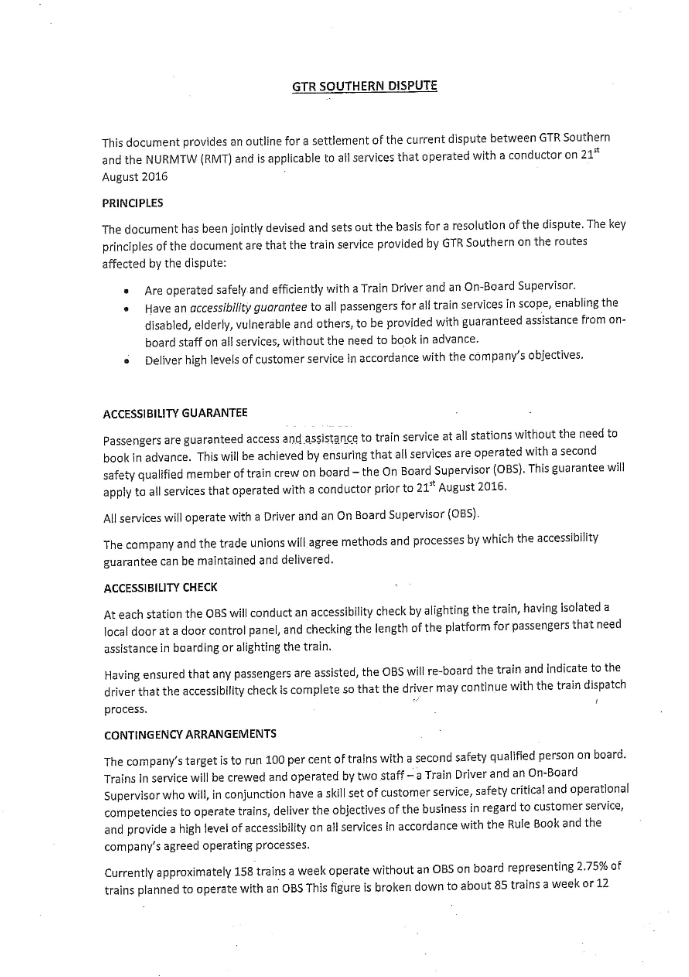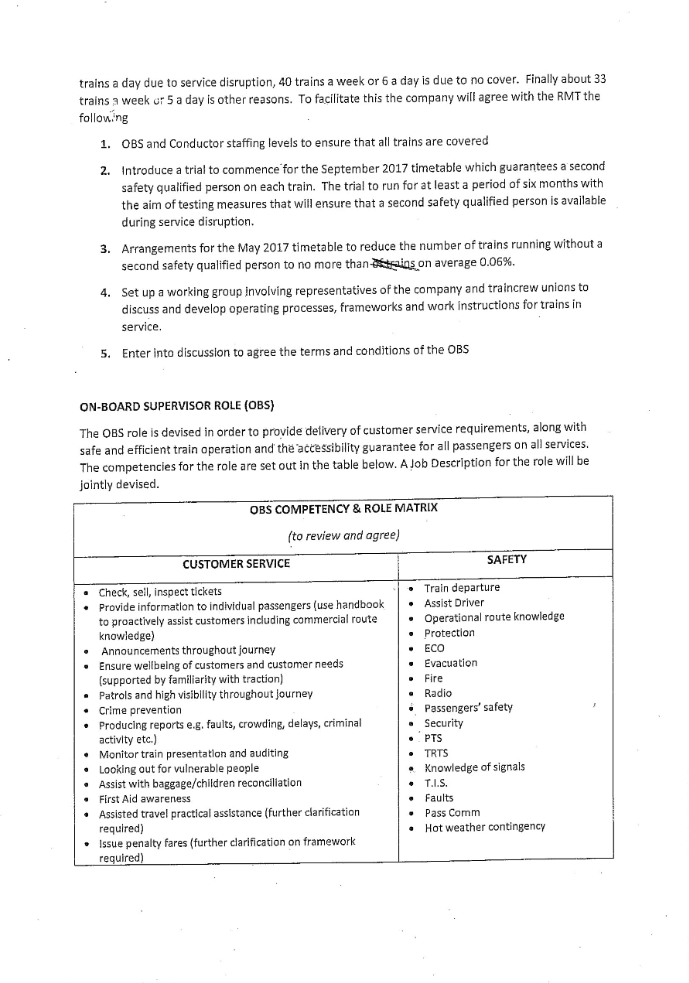
EXCLUSIVE: How has the Southern Rail Crisis changed the game for Rail PR?

After our recent high court victory, viral protests, and several exposes of what is really going on behind the scenes; our campaign has given commuters their best platform yet for representation on the Southern Rail crisis.

ABC campaigner Emily Yates spoke to the rail journalist Tom Ingall as part of an in-depth, 8 page feature in this month’s edition of Rail Review. We include a download link for the full PDF below, with thanks to Tom Ingall, Rail Review and Bauer Media.

DOWNLOAD HERE: Rail Review – the role of social media in rail PR

The importance of social media in a David vs Goliath battle

With the unprecedented anger caused by the ongoing Southern Rail crisis, this is not the first time that members of ABC have been made aware that our campaign has caused a serious stir behind the scenes of rail industry (and Department for Transport) public relations.

It now appears that our campaign forms part of what is very much a ‘live discussion’ behind the scenes of the rail industry. In this month’s Rail Review, Tom Ingall takes a comprehensive look at the situation and asks what rail public relations can learn from our campaign.

Read in the context of our recent court decision (which forces Chris Grayling to finally act on Southern Rail’s contractual breaches), it is important to note that social media has also played a key part in the crowd-funding and crowd-sourced research behind our legal case. The fact that we are the one body to achieve what MPs and even the Transport Select Committee could not (a decision on force majeure) means there is no more room for anyone in the rail industry to diminish the seriousness of our campaign simply because of the social media techniques we use. These techniques are in fact the only resources available to volunteer campaigners who are defending themselves against an utter encroachment into their family lives, businesses and livelihoods.

With the precedent-setting decision on ABC’s “standing” in our court case last month, the way is now clear for other campaigns to set up along the lines of the legal crowd-funding model we have used; which means there really is a last resort for action when all other means of representation fail us.

What does the article have to say about ABC?

Tom Ingall’s opening statement is exactly the realisation that inspired the creation of ABC – our decision to focus on crowd-sourced research, cross-platform publishing and investigative ‘citizen journalism’:

“Anyone with a smartphone in their pocket has the tools to be a multimedia journalist. More importantly, they also have the power of a publisher.”

ABC has been working in this way since May 2016 – taking great inspiration from David Boyle, who back in June 2016 wrote an entire ebook on the Southern Rail crisis in the space of a week! If you haven’t read it, we strongly recommend downloading ‘Cancelled: The strange, disturbing story of the crisis at Southern Rail’ here.

David Boyle called for ‘proper investigative journalism’ on Southern Rail at the time – and we took him very seriously; beginning a year long experiment on a crowd-sourced version of ‘proper investigative journalism’ that would empower commuters when all other channels of representation failed us.

As Tom Ingall notes in the article, ABC has excelled in the “nimble use of platforms”, including: viral Twitter hashtags; our ABC Facebook group (which has brought people together to organise, support each other and share research); Periscope (live broadcasts of our protests, which have allowed those unable to attend events to fully engage); and Thunderclaps (an instant viral strategy that helped us reach over a quarter of a million people at the time of our December protest at the DfT). Tom also features the results of our ABC Passenger Survey prominently in the article, which highlight the staggering effect on lives and livelihoods caused by the ongoing Southern Rail crisis.

Campaign for Better Transport’s Stephen Joseph OBE comments on ABC’s innovative crowd-sourced model:

We were delighted to read a response from Stephen Joseph OBE at the end of the article, where he highlights a few points from which to take Tom Ingall’s excellent analysis forward. Stephen calls for a truly progressive view of the possibilities of properly including passengers in the discussion. He praises the work of ABC’s network in discovering weaknesses within the current system – in particular the work of Danny Jeremiah in proposing a solution to fix the user experience of ticket machines and ensure that we can easily access the cheapest fares.

Stephen Joseph has been an advocate of our methods since 2016, when he predicted that “rail operators will have to deal in future with a new type of passenger lobby group organised by young professionals who are adept at using social media”.

We are honoured to include several long-standing passenger and disability rights campaigns in our network, including Campaign for Better Transport, the Foundation for Integrated Transport, Fair Fares Now, Transport for All and Bring Back British Rail; as well as dozens of regional commuter groups across London and the South.

Please help us to continue our work!

The entire strength of our campaign relies on keeping it independently funded, and we desperately need your help. Donating to help us pay our lawyers for our recent high court victory will also allow us to continue bringing you the best coverage and analysis of what’s really going on behind the scenes of Southern Rail; including many more exclusive publications!

Within the last month alone, we have leaked information from the Gibb report, as well as the complete version of a buried Rail Delivery Group report arguing for Conductors to remain on trains. Both reports were officially published within the same week as each of our leaks; and our recent high court decision has now forced Chris Grayling to decide on Southern Rail’s contractual breaches by 13th July.

From the point of view of ABC’s dedicated campaigners, we are only just getting started. We are determined to focus all our efforts on campaigning for truth, justice and compensation for all commuters as our volunteer organisation spreads around the country.

We are urgently seeking funds to pay our lawyers and to keep ABC going! Please donate whatever you can.

EXCLUSIVE: Full report of ABC’s legal victory, which forces Chris Grayling to decide Southern Rail breaches

Thursday’s court decision was neither an outright win nor a loss for ABC. But, it was most certainly a valuable outcome; which now forms an urgent judicial/political pressure on the Transport Minister.

Much of the newspaper reporting (and DfT press release) on our case has been a little confused; so we now publish the first clear and accurate analysis of the legal situation. Please accept our apologies for not publishing sooner – ABC is volunteer-run by passengers alongside our day jobs, campaigning and daily commuting nightmare; and with the court case and a visit to Parliament we have been extremely busy!

So, what exactly happened on Thursday?

The most important thing to know is that the premise of our entire judicial review application was our first ground:Delay“. This refers to our argument that the 14 months the DfT has spent deliberating on Southern Rail’s contractual breaches is an “unreasonable delay” – an argument, in other words, for the right of commuters to demand scrutiny of an essential public service in a timely manner.

On Thursday 29th June, the Judge agreed with this principle and gave the Transport Minister Chris Grayling two weeks to produce a final decision on Southern Rail’s defense for its breaches (force majeure). He must now inform GTR of his final decision by 13th July, or permission for our judicial review will automatically be granted.

Though the DfT’s line in the press is that our case was “thrown out of court”, it is clear that this was a significant legal victory, or it would not now form an urgent political pressure on the government; as demonstrated at the Southern Rail Parliamentary debate yesterday.

We will now wait until the 13th July to see if Chris Grayling complies with the Judge’s order – if he does not, our judicial review will go forward.

Why was our case a significant legal victory?

In addition to forcing the Transport Minister to make a final decision on force majeure by 13th July, our case represents a precedent-setting ruling for public interest in contracts between government departments and private companies. There are two outcomes here that should be of great interest to campaigners; as well as equality and human rights lawyers:

  1. It is at least arguable that there is a public law duty owed to the public by the Secretary of State that franchise agreements are enforced in a reasonable manner (in addition to any contractual or statutory enforcement obligations). Further, Mr Justice Ouseley commented that it was ‘perfectly obvious’ that the provision of public transport through an effective franchise system was undertaken for the purpose of providing a public service.
  2. It is at least arguable that where a public body issues a policy document (the enforcement policy) it must be implied that decisions taken under that policy must be made in a reasonable time and cannot be left until “kingdom come”. Mr Justice Ouseley said “there is an implied obligation to reach decisions in a reasonable time in all the circumstances of the case.”

The Highlights:

The Judge had little patience for the DfT’s argument that this area of law was “not the business of the public” and did not entertain his argument that decisions regarding the relationship between the DfT and GTR “do not have any direct effect on anyone else.”

Best of all, the judge dismissed out of hand the DfT’s claim that the 1,500 commuters who have funded our court case “do not have standing” or “lack interest” in the matter. This in itself is incredibly significant, as the DfT had shamelessly implied in written communication that our non-profit organisation (established at the peak of the Southern Rail crisis last year) was not a ‘respectable’ enough organisation.

Thus, ABC’s judicial review case represents a new legal crowdfunding model that is capable of forcing the government to be accountable to the public when all other democratic mechanisms fail. The Judge did not hesitate to accept our “standing”, and this suggests that campaigns like ours can be even more successful in pressuring government policy in future.

Our Equality Act argument will not go forward, due to a technicality

On this topic, there is one very important clarification to make. The Equality Act challenge involved with this judicial review had nothing whatsoever to do with our ongoing campaigning efforts on driver only operation (DOO); regarding the equality of access breaches occurring at rural and unstaffed stations. Any report of this in the rail media is an error and we will be asking for corrections.

The Equality part of our case was in fact formed of three smaller grounds arising from the first on “Delay” – namely that the DfT’s failure to act on GTR’s breaches of benchmarks throughout 2016 resulted in breaches of the Equality Act on Southern Rail. That is to say, that the extreme overcrowding resulting from these contractual breaches had a discriminatory effect on disabled people attempting to use the railway at that time. Of these three grounds, only one was discussed in court and it was rejected on a technicality.

Is it true that an Equality Act challenge on DOO is still “inevitable”?

It is absolutely still the case that our legal advice from Devonshires (and that of several other pro bono lawyers) is that an Equality Act challenge on DOO is inevitable; and extremely likely to be successful.

Anyone in doubt of this opinion might like to read the original leaked version of the 2-year buried Rail Delivery Group report on disabled access, released exclusively on this blog last week. Ironically, this vital report on disabled access gives us yet another piece of encouraging legal advice on the matter: namely, that an Equality Act challenge on DOO is “highly likely” and (upon success) “likely” to force a change to government policy.

The buried document has since been published by the Rail Delivery Group, yet this controversial report – arguing that Conductors are the best source of assistance for disabled people – has received very little press coverage. Nor have we heard any explanation from the Rail Delivery Group as to why it was suppressed for so long, and why nobody even knew of its existence. The reason for its suppression is almost certainly the strength of its arguments for the full staffing of trains and stations; and its obvious opposition to “clear trends” of destaffing arising from the McNulty report.

Major disability charities have already responded with shock at the suppression of this document, and we have made clear to our disabled members that ABC will support them as much as we can on any legal action they plan to take forward. On this issue, we repeat (for what seems like the hundredth time) that these failures of access occur regularly on Southern Rail, due to there being no second staff member on trains for which disabled people have pre-booked assistance.

We are still urgently crowdfunding to pay our brilliant lawyers, and urgently need to get to £15,000 by 18th July. Please donate whatever you can to help us!

Major disability charities congratulate ABC on leaking long-buried Rail Delivery Group report

ABC is now urgently crowdfunding for our legal action on government accountability and disability rights on Southern Rail.

We are due in court tomorrow, and will be informing you of the exact time later this afternoon, as soon as it is confirmed by the court. In the meantime, leading disability charities have written to us with their strong reactions to our recent revelation of a buried Rail Delivery Group report on rail accessibility.

Our application for a judicial review of the government’s handling of the failed Southern Rail contract has the support and backing of Transport for All, who seek to contribute numerous witness reports and expert testimony to our legal case.

  • Catherine Smith, Campaigns and Outreach Officer for Transport for All, said:

“It’s shocking that this damning report was hidden from the public for so long.

“At Transport for All we hear daily from Disabled people who experience discrimination on our railways – it’s truly shameful that the industry would knowingly push ahead with plans that will lock Disabled and older people out of our rail network.”

We have also received valuable input from Muscular Dystrophy UK, and thank their CEO Robert Meadowcroft for his words of support today:

  • Robert Meadowcroft, Chief Executive of Muscular Dystrophy UK, said:

“We congratulate ABC’s dedicated efforts to tackle the discrimination experienced by disabled rail commuters and are pleased to know that Trailblazers were able to feed in to this great work.

“The report they published yesterday highlights how the government are actively placing disabled people at a great disadvantage by pressing forward with their plans to run driver-only operated trains. Public transport journeys for disabled people are already difficult, being nearly five times longer, more expensive and more stressful than they are for non-disabled people.  

“Train companies often require wheelchair users to book assistance in advance, with 24 hours’ notice; yet we know of many stories, of people with muscular dystrophy failing to receive their pre-booked assistance and being left stranded for hours on end.

“Given that disabled commuters already struggle to get the assistance they need, driver-only operated trains will only make this worse.

“The government and transport companies need to put accessibility at the heart of future design and provision of services, including improving the turn-up-and-go system.

“It is clear, these issues need to be resolved as matter of urgency, before another efficiency plan is put into place.”

Please follow ABC on Facebook and Twitter for more exclusive news and updates.

Exclusive: Buried report on rail access now available to download

Yesterday, we announced our discovery of a vital report on rail accessibility, commissioned by the Association of Train Operating Companies (now the Rail Delivery Group) and completed in May 2015. Nobody had viewed or even heard of this document’s existence until now – despite repeated calls from disabled people, campaigns like ABC and Transport for All, and even the Transport Select Committee; for proper oversight of disabled access during Southern Rail’s chaotic implementation of driver-only operation (DOO).

It now seems that over a whole year of calling for impact assessments and a proper, transparent public discussion of the impact of DOO on disabled and older people; a report had already done just that and has been sitting in a drawer at the Rail Delivery Group for the past two years.

DOWNLOAD THE FULL ‘ON TRACK FOR 2020’ REPORT HERE.

What does this mean for our legal case on Thursday?

The most ironic thing of all in the report coming to us at this time is the strong potential for legal challenge it clearly lays out. The Equality Act 2010 is a weak, ongoing process built by case law; and the breach of the Act occurring when Southern Rail runs unstaffed trains to unstaffed stations has already been said by many esteemed commentators and lawyers to be an extremely strong case if we can get it in front of a judge.

With the Department for Transport preferring an “outcome-based” rather than a “compliance based” approach to the Equality Act, we believe that they not only exempt themselves from these rules, but rather fear new case law being made that will compel them to comply. The report states it is “highly likely” that this will happen and “likely” that this in turn will have an effect on the legal position regarding the provision of disabled access. It is up to us to make this happen.

A witness statement from last week

Both ABC and Transport for All receive regular, if not weekly, reports of access failures on Southern Rail. Here is the most recent we received; describing an experience that has become all too familiar to disabled passengers:

“I’m a wheelchair user. On the 23rd June 2017 I travelled from London to Brighton. I had booked ramp assistance for the outward journey three days in advance. But booking made no difference: platform staff at Victoria didn’t know about my booking, and when I arrived at Brighton, no one came with a ramp to get me off the train: station staff had absolutely no idea I was on the train. I was very angry. For my return journey, staff at Brighton promised to inform Victoria I was on my way. But on arrival at Victoria, again no one came to assist me with a ramp – no one had informed Victoria I was coming. These are NOT isolated incidents: it happens to me very often, and it’s upsetting and annoying and causes much anxiety. Southern Rail pays empty lip service to accessibility for all passengers, but the reality is that they don’t give a toss and refuse to implement policies and procedures which actually make the promised assistance solidly reliable.”

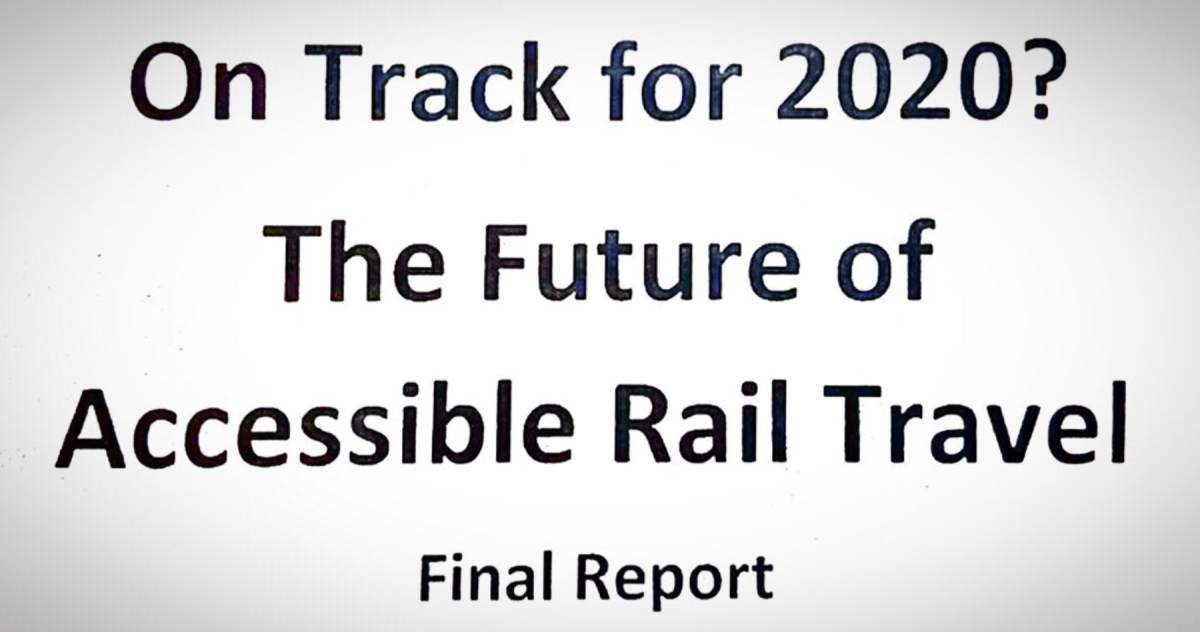
On Track for 2020? The Future of Accessible Rail Travel

The full report can be downloaded here:

On Track for 2020 – Full report

To donate to our crowdfunder, click here.

Follow us on Facebook and Twitter for updates.

[This article was edited on 21.04.2022. to add a more prominent link to the report to the top of the page.]

Exclusive: ABC reveals buried RDG report on disabled access, which strongly advises keeping the guard on the train

Since launching an urgent crowdfunder for our ongoing legal case against the Department for Transport on 19th June, we have received an anonymous package in the post…

The package contained a vital report on rail accessibility, commissioned by ATOC (now the Rail Delivery Group) and completed in May 2015. ‘On Track for 2020? The Future of Accessible Rail Travel’ has been kept under lock and key until now and we release it today in the belief that every disabled and older citizen in the UK has the right to be informed of its contents. It would appear that somebody within the rail industry thought so too.

We have studied the report’s contents in depth – and discovered that it contains strongly termed warnings about the impact of driver-only operation (DOO) and railway destaffing on disabled and older people.

What’s so controversial about this report?

The contents of the report represents an argument over DOO that has received shamefully little attention by the press and politicians, many of whom have chosen instead to write off the unions’ concerns as “inexplicable”. We can no longer stand for the needs of disabled and older people to be treated as “niche” concern.

We point towards the report’s own argument that the economic benefit of providing spontaneous access to disabled and older people actually far outweighs the cost. (Of course, the economic argument is only necessary if the moral, societal, and legal ones are not enough.) On the legal note, the report includes worrying implications in the statement that the Department for Transport prefers an “outcome-based” rather than a “compliance based” approach towards the Equality Act 2010.

The report confirms ABC’s arguments by strongly distinguishing between metro and rural parts of the rail network, and stating that the practice of running unstaffed trains running to unstaffed stations is a breach of the Equality Act. It says definitively: “It is Conductors who are best placed to ensure that assistance is delivered effectively and in accordance with the law.”

The report contains extensive discussion of the “clear trends” arising from the McNulty report in regard to de-staffing; and its authors repeatedly note their opposition to prospective policy changes that might allow unstaffed trains to run to unstaffed stations.

Why are we publishing?

It is clear that this is a high quality report, and one that was originally written for the benefit of both policy-makers and those who work on the railway. In addition to this, the near-total exclusion of disabled and older people from the DOO debate has gone on so long that the public has the right to view its recommendations.

The rail strikes could be solved right now with the provision of a proper”Guard Guarantee” – and this would have the benefit of ending industrial action on the Southern Rail network, just as it enters its second year.

Why has this report been buried for so long?

This discovery comes just days after the 6-month-delayed release of the Gibb report; just as journalists and MPs raise calls for a proper analysis of its editing decisions, and the release of the redacted Appendix Nine.

ABC’s disabled members have been very upset that the issue of disabled access was entirely absent from the Gibb Report. This issue has previously been absent from the RSSB report on DOO; as well as recent ORR publications, which focus mainly on the methodology of DOO and may not be providing adequate oversight of the activities of Southern Rail in regard to new staffing practices.

The Transport Select Committee emphasised the urgent need for a disability impact assessment on GTR in their November 2016 report, yet even now our campaign takes regular witness reports from disabled people who have been abandoned on trains and platforms by Southern Rail; often due to the absence of a second member of staff on board.

The report provides invaluable evidence for our legal case on disabled access, and notes that there is currently “very little case law” and that it is “highly likely that at some point relevant case law will be made”. It also states: “it is likely that case law will in future have an impact on accessibility”.

On Track for 2020? The Future of Accessible Rail Travel

Co-authored by Ann Frye Ltd, Rail Accessibility Ltd and MWW Transport Consultants.

Final Report, May 2015

This Report was commissioned by the Association of Train Operating Companies (now the Rail Delivery Group) to consider how accessible Britain’s railway network will be to older and disabled people by 1st January 2020 (the date by which all rolling stock must meet legal accessibility requirements).

To keep up to date with ABC’s latest news and updates, follow us on Facebook and Twitter.

To donate to our legal crowdfunder, or get up to date on our legal news, click here.

[This article was edited on 21/04/2022 to include a link to the report and remove expired links to summary documents. The full report was released on this blog the following day, 27/06/2017, and finally published on the Rail Delivery Group’s website a week later.]

IMPORTANT: a message to our supporters on our final weekend before the Aslef overtime ban

We wanted to thank you for all your support on social media. We are now well on the way to raising £15,000 and urgently need to be funded before Thursday – so if you can convince even one more person to donate this weekend, it will have a massive effect on our chances of success! This is a real David vs Goliath battle, as you all know.

This is the best link for sharing and it would have an incredible effect if every one of our backers could share it on social media and explain why they support our case.

We are now entering our final weekend of normal life before the commencement of the next Aslef overtime ban. Claims about just how severely Southern Rail is understaffed vary between Southern Rail’s claim of 10% and Aslef’s of 25% – either way, we know from months of suffering how bad an impact this will have. We ask you to join us in calling for proper scrutiny by the media and MPs on the real issues underlying this never-ending crisis of industrial relations.

There has been a lot going on in Southern Rail news this week and we’ve been doing our best to promote the call for proper public scrutiny of this ongoing crisis.

  • A lively discussion between ABC’s Emily Yates and LBC’s Nick Ferrari this morning.
  • ABC co-director Brad Rees talking about our court case in depth in this TV interview.
  • **On Tuesday, we published an expose of alleged health and safety issues at London Victoria, later acknowledged in the Gibb report, where he stated “At…Victoria, pedestrian flows, gateline + concourse capacity are all significantly influenced by commercial strategy….”

We’re doing as much as we can to bring this situation to a close once and for all and badly need your help. Every Facebook share, tweet and – most of all – real life conversation(!) helps us fight back against a very ill-informed media and create a real chance for scrutiny of the government’s agenda.

Please help us to raise £15,000 by Thursday – and let’s do our best to avoid a repeat of the summer of 2016!

Please donate to our crowdfunder and spread the message to your friends and family!

Please follow us on Twitter and Facebook for the latest updates.

EXCLUSIVE: Gibb report expected to highlight urgent need for safety improvements at London Victoria

Today, we exclusively reveal photographic proof of important health and safety related work at Victoria station that has been postponed by the Department for Transport/Network Rail. We expect the Gibb report to highlight this concern, and wish to alert press and MPs to the fact that sources close to Gibb have now confirmed the report was ready for release on April 6th of this year.

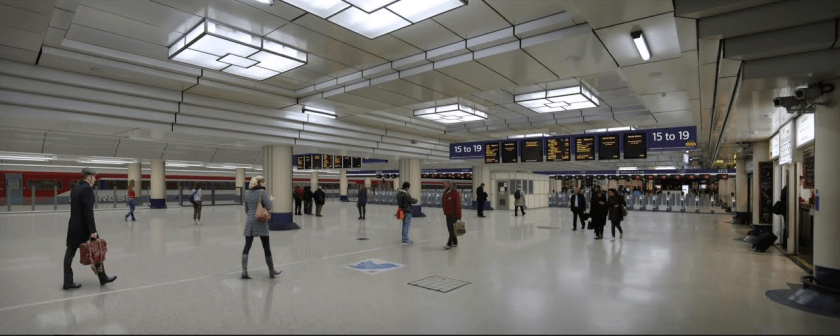
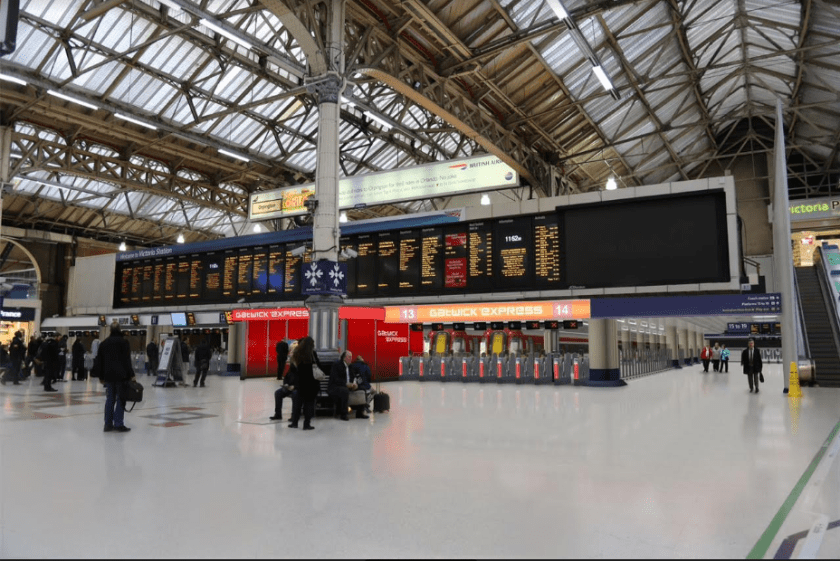
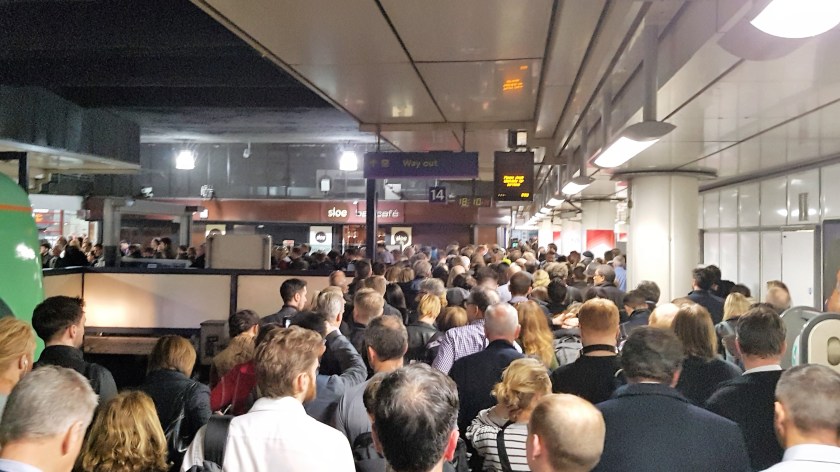
The following images come in two pairs. In each pair, the first is a photograph of the current layout at Victoria, and the second a computer simulation from Network Rail of work that should have already been carried out to ease the overcrowding:

Victoria 2

Victoria 1.png

Victoria 3.png

Victoria 4

Senior Network Rail managers highlighted to Chris Gibb on a visit to Victoria station in late 2016 that there were problems with severe congestion for Brighton mainline passengers. The following comment, and everything else in quotes, comes directly from a Network Rail manager:

“There aren’t enough ticket gates for passengers using platforms 15-19. A rebuild of the gate-line was scheduled to have been completed as part of the congestion relief project in CP5 [Network Rail Control Period 5] but was postponed to CP6 [2019-24] to save costs. We made Gibb well aware of how ridiculous the decision was and how long passengers are having to wait to leave the station. We’re hoping he’ll recommend the work is carried out immediately – it’s an accident waiting to happen. This is work that was first planned 20 years ago”

The Network Rail managers informed Gibb that at peak times, passengers were observed queuing up to 5 minutes to pass through the gates at platforms 15-19.

Gibb also inspected the dedicated Gatwick Express platforms and asked why 12-car trains from Brighton were now routinely using platforms with ticket barriers designed to cope with far fewer passengers.

“It’s an unacceptable situation. It’s the first sight of London for tourists from the airport and we’ve had complaints from the Gatwick people who said the experience is costing them travellers”

Following a subsequent risk assessment, Network Rail identified safety concerns about passengers backing up in the confined space and the ability to evacuate in emergency. They have since ordered staff to leave a mesh gate between the concourse at 15-19 and the Gatwick Express platforms unlocked at peak times.

“If passengers knew it was unlocked they could skip the ticket barriers altogether, so we leave it shut but unlocked in case of emergency”

Victoria staff are now regularly asking control to hold trains outside the station to prevent simultaneous arrivals on platforms 15-19 and limit the flow of passengers, leading to knock-on delays on the mainline.

Platform 19, where the platform narrows to 6 feet in places because of roof supports, has been identified as a particular problem.

“We try to ensure the busiest services coming from the coast never arrive on platform 19. There’s a real risk that if anything happened to passengers, we could be prosecuted. When we’ve had a full train arriving – and then passengers for the subsequent departure heading in to the crowd – it’s been chaos. We’ve had panic attacks and even a kid slipping between the platform and a train.”

vic platform 2

Comment from ABC:

Please note, our pursuit of the Gibb report is part of a long-standing lobbying campaign for our commuter group and not connected to our legal action against the Department for Transport.

“Commuters experienced another night of chaos on Southern Rail last night, with an unusually high number of issues contributing to the breakdown of service, including a trackside fire. This resulted in delays, cancellations, diversions, overcrowding and skipped stations for passengers, many of whom spent hours trying to get home.

Though the majority of passengers have so far blamed the company, we have to step up and share what information we have on the impact that issues at Victoria Station may have had on last night’s suffering. The above information from a Network Rail manager shows that important health and safety work to solve passenger congestion has been postponed at Victoria; and that this has not only had an impact on passenger safety, but also the flow of trains in and out of the station.

We are very concerned that if the current layout is struggling to handle the existing flow of passengers, it would probably be unable to cope with passengers turning back against the flow in the event of a fire or a security incident. This could be a recipe for disaster and we would like to see the risk assessment that has deemed the current layout safe.

The wider issue highlighted by this situation is the crisis of funding on our railways, which may have become too large an influence on planning and policy. The income from retail spaces is important in sustaining Network Rail, and may also form an important priority for the Department for Transport; in line with recommendations from the 2011 McNulty report.

We share this information today in the hope of enlightening passengers to the extremely complex causes of this ongoing rail crisis. It is not enough to simply blame Southern Rail. It is the Department for Transport that should take responsibility for this rail crisis and we are convinced that they are still avoiding this responsibility in many crucial areas.

We already know (from a response to a question in the House of Lords on April 7th) that the Gibb report was handed to the Department for Transport on 30th December last year. In addition to this, sources have today confirmed that this report was ready for release on April 6th of this year. There is no excuse for the government to hold it back a day longer.

We are still at exactly the point we were a year ago with the Southern Rail crisis, and it is time for every responsible MP to stand up and demand the Gibb report’s immediate release – as a first step to removing this disastrous management contract from Govia Thameslink Railway.”

ABC is currently crowdfunding a court hearing for a judicial review of the Department for Transport. To donate, or get an update on their case; click here.

Chris Grayling remains Transport Minister – will he continue to bury vital Southern Rail report?

It was announced in yesterday’s cabinet reshuffle that Chris Grayling is to remain in place as Transport Minister. A quick glance at our Twitter timeline will tell you just how outraged commuters are about this – Grayling is widely blamed for his refusal to solve the Southern Rail crisis, despite the company being in special measures for nearly two years.

It is exactly six months since hundreds of commuters marched to the doors of the Department for Transport, demanding that Grayling either intervene in the Southern Rail management contract, or resign. He did neither: instead he chose to lay insult upon injury to southern passengers by withholding an essential report into the causes of the Southern Rail crisis.

The star railwayman Chris Gibb was touted by the Transport Minister back in September as the best person to analyse and fix the problems on Southern. However, the “Gibb report” has now been under lock and key at the Department for Transport for nearly six months, denying the public their right to a solution – and their right to answers – after suffering through this unprecedented rail crisis.

ABC protest at DfT December credit - Bradley Rees

The General Election results – is there a “Southern Fail vote”?

Yesterday’s reshuffle came after disastrous election results for the Conservatives in many vital seats in the Southern Rail region. Conservative MPs lost their seats in Brighton Kemptown, Croydon Central and Eastbourne; while Amber Rudd narrowly hung onto her Hastings seat with a 346 majority, and Labour’s Peter Kyle achieved a landslide victory of 18,000 votes in Hove.

Nobody can prove how much the public sentiment on Southern Rail affected these results, but we can remind you of the responses to our ABC Passenger Survey of December 2016, based on an in-depth questionnaire completed by 1000 commuters.

MP doing all they can

next election conservatives

The Gibb report must be released immediately – and in full.

We have now pursued the Gibb report for over six months. This vital report into the true causes of the Southern Rail crisis remains under lock and key at the Department for Transport, and has been reported by Graeme Paton of The Times to be heavily critical of the DfT’s role – Paton’s source said: “Govia Thameslink Railway (GTR) and Network Rail don’t come well out of this, but the report is scathing of the DfT. It is dynamite.”

While ABC campaigners have spent months pursuing FOI requests on the Gibb report, Caroline Lucas MP led the pursuit in the House of Commons, asking two Parliamentary questions and finally forcing Paul Maynard MP to admit they would be holding it back until after the election – a decision she called “deeply undemocratic and an absolute disgrace”.

Our election demands went viral last month, receiving support from many Labour, Liberal Democrat and Green candidates on the urgent need for DfT accountability, disabled access, and the stripping of the Southern Rail contract. We were especially pleased to see the Shadow Transport Secretary Andy McDonald pick up the baton on Gibb – his stance on Southern Rail is reasonable and well-informed, as you’ll observe in this recent interview.

Andy McDonald tweet

Meanwhile, Tim Loughton, the Conservative MP for East Worthing, has tweeted that the Gibb report “must now be published without delay”. We are glad to gain support on this issue from at least one Conservative MP; after all, this is a crisis that affects the daily life of every southern constituent and should always have been a cross-party issue.

Loughton tweet 2

We are now asking all MPs to ensure that the Department for Transport stays true to its commitment to publish the Gibb report by the end of the second financial quarter – as they have already promised us in response to our FOI requests. This means that the Gibb report must be released by the end of June at the latest – and furthermore, must be published in full.

This is a matter of urgent public interest in the south, and has ramifications for transport policy all over the UK, not to mention our country’s democratic values. For Theresa May’s government to be talking about bringing in further restrictions to the right to strike when they have not even appraised the causes of this unprecedented crisis is at best premature, and at worst, ideologically motivated.

With a recent interview putting the Director of Operations Planning at Southern Rail on record as saying he “hasn’t seen the final Gibb report” we should all be asking louder than ever – to what extent is this failing rail company being micro-managed by the Department for Transport?

Please follow ABC on Facebook and Twitter to get daily updates on our campaigns – we have lots of news on the way this month.

#SouthernFail election demands from the Association of British Commuters

With the snap general election fast approaching, there is no better time for the Association of British Commuters to restate the demands we’ve been making throughout the Southern Rail crisis. We will be addressing all former and prospective MPs with these demands and requesting their full response – so we can tell you which candidates have the best positions on Southern Rail in advance of June 8th.

1. Independent Public Inquiry into the relationship between Govia Thameslink Railway and the Department for Transport.

2. The return of guaranteed assistance for disabled passengers on services currently branded as Southern Rail – best achieved through the “Guard Guarantee”.

3. Immediate removal of the TGSN contract from Govia and passenger representation in any solution; which must take into account the findings of the Chris Gibb report.

Why are these demands so important and how will they solve the Southern Rail crisis? – our demands in depth:

1. Independent public inquiry into the relationship between Govia and the DfT, to encompass civil service ethics.

Southern Rail is not a typical franchise. It is a subcontractor to the government in what has been one of the UK’s most poorly judged and catastrophic rail management contracts. The company has been in special measures for nearly two years, and is known to be in serious breach of its performance benchmarks – issues that far predate the industrial action on the network. To this day, the government postpones its verdict on force majeure (Southern’s defence for its excessive failure) and has just succeeded in burying the Chris Gibb report under the veil of ‘purdah’ rules around the upcoming general election. The Gibb report is believed to give a final analysis of the true responsibility for the Southern Rail crisis, and was reported by Graeme Paton of The Times to be heavily critical of the government’s role in particular – his source said: “Govia Thameslink Railway (GTR) and Network Rail don’t come well out of this, but the report is scathing of the DfT. It is dynamite.” Meanwhile, the DfT are already under investigation by parliamentary watchdog the National Audit Office for their management of the GTR franchise.

It is also widely believed that the year-long industrial dispute on Southern is in fact a dispute-by-proxy, with the Department for Transport in the driving seat. Indeed, the civil servant Peter Wilkinson gave forewarning of the industrial upheaval back in February 2016 at a town hall meeting organised by Croydon MP Gavin Barwell. He said: “Over the next three years we’re going to be having punch ups and we will see industrial action and I want your support… They can’t afford to spend too long on strike and I will push them into that place.” The same Peter Wilkinson, MD of Passenger Services at the DfT, was also recently the subject of a Guardian expose over the allegation that he awarded contracts to Govia while also the director and majority shareholder of First Class Partnerships; a consultancy that had Govia as a long-standing client.

Questions about the oversight of the civil service do not end there. Govia is also the owner of the so-called Independent Penalty Fares Appeal Service, itself the subject of a Guardian expose in February 2015 which showed that customers were paying unacceptable ‘admin fees’ even in the case of a successful appeal. Shockingly, the Independent Penalty Fare Appeals Service is still in Govia’s hands, despite them also running both Southern and Southeastern franchises. In the case of the Southern management contract in particular, we believe that the issue of penalty fares requires a comprehensive review. It is a simple fact of their contract that Govia is paid a flat fee for running services, so the only way they can logically increase their income is by cost-cutting, deskilling, and adapting staff roles towards revenue protection (and thus, away from disabled access).

It is vital that the Department for Transport are finally compelled to release the details of their management contract with Govia, and the ‘remedial plan’ that announced their adapted performance benchmarks back in February 2016. Both these documents remain heavily redacted; allowing both Govia and the Department for Transport to completely evade accountability for a crisis that has already cost the taxpayer £38 million and counting. And that’s not to mention the total impact on the lives, families and livelihoods of the public – including an estimated £300 million loss to the economy in the South.

2. The return of guaranteed assistance for disabled passengers on services currently branded as Southern Rail – best achieved through the “Guard Guarantee”.

Conditions on Southern Rail have improved for regular commuters over the last three months, but we should not forget that this period has actually been the most stressful time yet for disabled passengers; dozens of whom have been left behind on platforms or have even had to throw themselves between the doors of trains to get assistance. Hundreds more – especially wheelchair users who live at rural stations – are now anxious about whether they can still spontaneously travel, since Southern Rail have suggested there is “no cast-iron guarantee” that assistance will be available at all stations.

Contrary to their claim that 0.06% of trains will run without a second staff member in “exceptional circumstances”, Southern Rail’s estimate of the number of trains running DOO keeps changing. The estimate was recently reported to be over 8,200 a year, and the most recent internal report that ABC has seen suggests 50+ trains were running without an on-board supervisor allocated on Sunday 21st May alone. This is a far cry from the 1 in 1750 trains that Southern Rail originally claimed would run without a second staff member – an estimate that would have equated to one to two trains per day. Considering Southern Rail’s contractual incentives (as queried in part one above), there are few in doubt that disabled people’s access will now be increasingly compromised by Southern Rail for the sake of cost-cutting on the network; and the redirection of resources into revenue protection.

The guarantee of a second member of staff on trains is a binary point and needs to finally be recognised as such. Unstaffed trains running to unstaffed stations constitute a breach of the Equality Act in creating a ‘policy, practice or criterion’ which actively discriminates – and this is the case whether there are 2, 50 or 2,000 unstaffed trains per day. It is not just ABC, disabled passengers and striking railway workers who are saying this – only last month we saw the highly respected railwayman Peter Rayner (one of the original architects of DOO under British Rail) break ranks with the rail industry to say the same.

Adequate staffing to ensure that Southern Rail conforms to the Equality Act can be achieved in one of two ways: 1) by a guaranteed member of staff on every train or 2) the staffing of every station from first to last. When you consider that 33 rural stations on the Southern network are completely unstaffed, and add that to the vital public security benefits of having a properly trained guard on the train; the restoration of the guard guarantee seems undeniably  the best solution. It has the added benefit of ending the industrial dispute and ensuring that any major changes to working practices are done slowly and surely, with proper care to camera equipment, dispatch procedure, and disabled access.

3. Immediate removal of the TGSN contract from Govia and passenger representation in any solution; which must take into account the findings of the Chris Gibb report.

We have campaigned all year for Govia to lose its management contract, and this remains an immediate demand of our campaign; as well as dozens of other passenger groups and MPs across London and the South. Public trust in the company is at such a catastrophic level that even the Alliance of Chambers of Commerce have spent months warning shareholders of their involvement with Govia’s parent company, The Go Ahead Group. One major shareholder, JP Morgan, finally reduced their interest in the brand just yesterday.

The removal of the TGSN franchise should be accompanied by the immediate publication of the suppressed Chris Gibb report on the true extent of the failings of Southern Rail. There is no excuse whatsoever for this report to be suppressed until after the General Election, when it offers us, finally, a proper analysis on the parties to blame for the Southern Rail crisis. The DfT’s unique management contract with Govia Thameslink Railway was always a poorly judged and unwieldy type of mega-franchise, and it may be that Gibb has recommended that the franchise be broken up into smaller parts. Whatever advice the report suggests, we demand that it is taken into account; and that passengers are given significant representation in any solution.

Furthermore, we believe that the endless industrial dispute on Southern Rail could have been easily solved back in September with a ScotRail type agreement, guaranteeing a second member of staff on all trains and thus conforming to the requirements of the Equality Act and the DfT’s Public Sector Equality Duty. The real circumstances of the industrial dispute, and the details of Southern Rail’s management contract, have been shrouded in secrecy; and we suspect that with the endless talks between Southern management, RMT and Aslef, we are watching little more than a farce. There has to be a limit to the carte blanche with which this company has been allowed to operate – and a proper calling to account of the DfT over public safety and accessibility standards – before this dispute really does spread nationwide.

ABC’s election plan

We will be asking all former MPs and candidates in the Southern Rail region to respond to the points above, and to account for their position on the Southern Rail crisis over the course of 2016-17. As always, we extend our invitation to MPs from every political party and will endorse all those who wish to support our three campaign demands

For passengers, we are soon to launch a “Southern Fail election app”, which will come pre-loaded with all major parties, MPs and constituencies, in order to help commuters be heard on their feelings about this vital election issue.

On party politics and the renationalisation debate:

As a campaign, we stay focused on the issues of justice and transparency in UK transport; on which our organisation was founded. We can only succeed in this aim by being completely focused on these issues, and our lobbying on the Southern Rail crisis will continue in exactly the same way whatever government ends up in power.

The Southern Rail crisis is unique because it is driven by the worst of both private industry and state stranglehold – and it’s essential that we keep attention focused on these specific circumstances. The majority of our members support renationalisation but we are not campaigning on this explicitly in order to keep focus on these unique circumstances.

To stay in touch with ABC’s election news, please follow us on Facebook and Twitter.

*this article was edited on 28.05.17. to correct an error – it is in fact the Alliance of Chambers of Commerce who have been writing to shareholders about the Southern Rail crisis, not the Sussex Chambers of Commerce as previously stated.

The truth about Chris Gibb and Southern Rail’s late night timetable changes…

Southern Rail’s late night timetable changes begin tomorrow, after the announcement earlier this month that late night trains between London Victoria and East Croydon will be cancelled indefinitely.

This has been met with angry reactions from late-night travelers, shift workers and even TfL, who complained that they had only been given three weeks notice of the changes, instead of the standard three months, according to Inside Croydon. For commuters, the notice period wasn’t quite so generous – we got just two weeks.

The reason for these changes is to allow Network Rail to perform essential maintenance work at night. It’s not in itself a bad plan, as East Croydon to Victoria operates as a 24-hour railway, making it particularly poor at resilience. But, why was this announcement so sudden? We asked this question of several people in the rail establishment and it led us to an answer – the late-night timetable changes are a recommendation from the Chris Gibb report. If you’d like to substantiate this, take a look at the recommendations he made for the West Coast Main Line in 2012 (same plan was used) or pose a question to Southern Rail, Network Rail or the Department for Transport directly.

Chris Gibb’s report has been suppressed by the government for nearly five months, and will now be held back until after the General Election. Chris Gibb is the star railwayman brought in to fix the problems on Southern Rail back in September 2016, so it is outrageous that the government refuse to release this report when by doing so they could finally explain to the public why the franchise has gone so badly wrong. In the meantime, MPs like Chris Philp still try to push the agenda of anti-strike laws in advance of the General Election – wouldn’t it be more reasonable for him to assess all parties’ true culpability for the crisis first and actually read the Gibb report?

It has been reported by Graeme Paton of The Times that the report is heavily critical of the government’s role in the Southern Rail crisis. His source said: “GTR and Network Rail don’t come well out of this, but the report is scathing of the DfT. It is dynamite.” It is not difficult to imagine, therefore, why it is being suppressed until after the General Election (if indeed it will ever reach the public). In all our months of chasing the report through FOI requests, just one MP has stood up and chased the report in Parliament: Caroline Lucas finally got an answer from Rail Minister Paul Maynard last month, calling his decision “deeply undemocratic and an absolute disgrace.”

ABC’s co-founder Emily Yates challenged Southern Rail on BBC Sussex two weeks ago – claiming that the late-night timetable changes were a recommendation in the Chris Gibb report and that this was being deliberately concealed. When pushed by the host Neil Pringle, Southern’s Director of Operations Planning admitted that he “had not seen the final Gibb report”. A single question now hangs in the air: If Southern Rail’s own Director of Operations Planning hasn’t seen the Gibb report, then just how badly is this company being micro-managed by the Department for Transport?

ABC will continue to ask questions throughout the General Election period, and we’ll soon be launching an updated version of our #SouthernFail app to help you tell your MP how you feel about their performance on Southern Rail! Stay tuned to our Twitter and Facebook channels for updates.

If you’d like to support our upcoming protests, election plans and legal action against the DfT, please sign up to our newsletter here.

A full list of late-night services to be scrapped can be found here.