The Railways Bill enters its Committee Stage tomorrow- a line by line discussion lasting four weeks that is the first chance for MPs to table amendments, and the first major opportunity for the public to influence the Bill.
The Committee must start by confronting the Bill’s fundamental problem: it is built on the same competition-based legal framework that was the main cause of failure under privatisation. This could now prevent the key goal of this once-in-a generation rail reform: the full integration of the railway, including finances, timetables and infrastructure.
Without strong amendments, competition and subsidy restrictions will spread throughout the legislation: forcing fragmentation, preventing integrated policy and restricting the value of public money.
We are joining We Own It and Bring Back British Rail to demand that the Bill Committee gets off to a strong start by committing to the following priorities:
1. All discussions must centre the fundamental problem with the Bill – its competition-based legal framework, which continues all the worst effects of privatisation. It must not go forward without proper, rail-specific exemptions and protections for public money.[1]
2. The Committee must assess the Bill according to the principle of ‘vertical integration’. This means full financial and operational integration and has been the main purpose of rail reform for five years, supported by successive governments, academic consensus and the rail industry itself. [2]
3. The government must be made to justify its decisions to continue competition in open access and ticket retail: this is the ultimate cause of the problems because they spread structural fragmentation throughout the system. Comparative economic evidence must be provided to the Committee on alternative legislative approaches, as the current cost-impact assessment for the Bill failed to make any estimate of its economic benefits.[3]
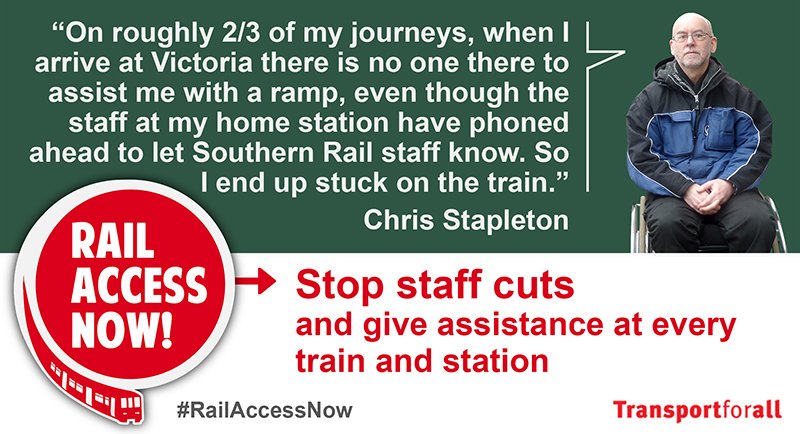
4. The Committee must demand much stronger, modern standards for passenger rights, with the Bill still using the terms and concepts of the Railways Act 1993, rather than any rights-based standards. Consumer rights and accessibility are also significantly deregulated by moving to a weak ‘Passenger Watchdog’ with an overriding duty of cost-efficiency.[4] Climate and sustainable development have been dropped from the Bill entirely, putting England out of alignment with Scotland on targets for modal shift and failing to incorporate UK duties under the Climate Act 2008.[5]
Rail integration prevented by competition and subsidy controls
The publication of the Railways Bill follows five years of attempts to create an organisational design for Great British Railways (GBR). The aim has always been to create a ‘guiding mind’ that would integrate infrastructure, train operations and timetabling to ‘maximise the social and economic benefits’ of rail.[6]
However, the Railways Bill has fundamentally failed in these objectives, due to its default compliance with competition and subsidy control law. This includes the Railways Act 1993; Railways Access Regulations 2016 and Competition Act 1998, as under privatisation; and is updated to include the more recent Subsidy Control Act 2022 (retained EU rules on State aid); and Digital Markets Competition and Consumers Act 2024. It is further damaged in its public interest values by the Deregulation Act 2015, which commits the Office of Rail and Road to take regulatory action only when ‘necessary’ and ‘proportionate’, protecting competition above the interests and rights of passengers.
Without strong amendments, the above framework will dictate GBR’s organisational design, forcing structural separation from the start.
Financial Fragmentation
Infrastructure and operations budgets have been strictly separated, including a ban on cross-subsidy.[7] This is due to the Bill’s default compliance with the Subsidy Control Act 2022, which puts severe restraints on any public funding that ‘confers an economic advantage’ to GBR and ‘has, or is capable of having’ an effect on competition.[8] This central split between GBR’s budgets will now restrict the value of public money and prevent integrated policy-making.
The Subsidy Control Act 2022 allows unrestricted funding for the primary purpose of infrastructure because it is seen as of ‘general’ benefit to the market. However, every other GBR function is made subject to strict subsidy controls that restrict public interest policy-making because they require policies to be designed to minimize negative effects on competition and ‘proportionate to their specific policy objective and limited to what is necessary to achieve it.’[9] This also applies to infrastructure funding that is for primarily public interest reasons, such as accessibility and climate.
Restrictions on GBR profit and growth
The conditions of the SCA22 mean that GBR will be forced to prioritise cost-efficiency and actively restrict its own profits and returns on investment whenever using public subsidies or making policy interventions.This follows a key subsidy control condition of the SCA22, where for subsidies given for Services of Public Economic Interest, the public authority ‘must be satisfied that the amount of the subsidy is limited to what is necessary to deliver the SPEI services, having regard to – (a) costs in delivering the SPEI services, and (b) reasonable profits to be made in doing so.’[10]
This must be the reason that the government has failed to include a passenger growth duty, despite this being strongly supported by public and industry and vital to creating a ‘virtuous circle’ of increased revenue and investment. Under the subsidy control regime it could have such a growth duty, commanding much more public investment from the start. However, this funding would have to be of ‘general’ benefit to the market, not favouring GBR’s own enterprises, making it a poor value investment from the taxpayer’s perspective.
Fragmentation of rail operations
The Railways Bill makes just one assertive move – bringing network access and timetabling decisions into GBR. However, it has been unable to integrate infrastructure, timetabling and operations under one public body, due to competition restraints in the Railway Access Regs 2016.[11]
Instead, the government intends to create ‘regional business units’; however, due to the split in infrastructure and operations budgets it will also be impossible to achieve integration within these bodies, also preventing the integration of management into a single legal entity.[12] It is unclear to what extent the ‘regional business units’ will be allowed to collaborate with each other and be nationally co-ordinated.
There will also be fragmentation within the Main GBR, including unclear and overlapping duties between a proposed ‘Network Organisation’ and ‘System Operator’ function.[13] As yet there is no clarity on how it will co-ordinate Network Rail functions such as infrastructure management and timetabling with the network access function of the ORR; and how this will affect Board and governance structures.
Ticket Retail and Fares
The Bill has made all GBR’s passenger-facing functions subject to the same competition rules as the private sector, but with one major difference. Because GBR is a ‘dominant’ in the competitive market, it will have to be under extra restraints to prevent it from favouring its profit or socioeconomic interest in decisions, because this would give it an ‘unfair’ advantage over the private sector.[14]
In ticket retailing and other cross-network services this means structural fragmentation and a high risk of ‘perverse incentives’ and conflicts of interest:
- GBR Retail will be structurally separated and banned from cross-subsidy or collaboration with other parts of GBR, preventing integrated policy-making. In a worst case scenario, it might even be run by a private company.[15]
- GBR’s cross network functions such as digital and ticketing infrastructure and information systems will have to be structurally separated to prevent a competitive advantage.
- Third-party licensing function must be separated from GBR to prevent any ‘unfair’ advantage to its own operations. This function will be moving to the pro-competition regulator ORR, blocking the democratic control of policy in passenger-facing services.
- Research and development is also subject to the rules of the free market, which has long prevented the urgent project of national fares and ticketing reform. The results are clear in the current activities of the private sector trade body, Rail Delivery Group, which is procuring multiple ticketing trial contracts with companies like Trainline. This wastes public money by duplicating the work, and creates fragmentation that will make it impossible to integrate these systems later. The government has no plan for how to abolish the Rail Delivery Group, but it is likely its research and development and procurement functions will also need to be structurally separated.
- Rail fares are also thrown out to the free market and could be almost entirely deregulated. The competition requirements will make public interest fares policies impossible; with signs that the industry is instead developing ‘dynamic pricing’ methods.[16]
Conclusion
In its current form, the Bill will cause severe and permanent restrictions on the value of public money. It must not go forward until rail-specific exemptions from competition law are created, ensuring the maximum of rail integration and proper safeguards for passenger rights and the value of public money.
The Committee stage begins on Tuesday 20th January and is expected to conclude by Thursday 12th February, 5pm. The public is invited to submit written evidence, which should be sent as soon as possible to scrutiny@parliament.uk
A full list of members and contact emails is available to download here.
REFERENCES:
[1] This relates in particular to the relationship between Sec 3 General Functions and Sec 18 General Duties of the Railways Bill. These must be analysed according to the competition framework that takes precedence over the entire Bill. See Railways Act 1993, sec 67(3) on competition regulation, (including greatly increased powers of ORR and CMA under recent competition changes); Rail Access Regulations 2016, Regs; 9, 10, 12, 14(9), 19(4) on structural separation; Competition Act 1998 Competition Act 1998 prohibitions on ‘agreements that distort competition’ and ‘abuse of market dominance’, sec 9 on block exemptions and Schedule 3 exemptions; Deregulation Act 2015, sec 108 on competition regulation; Enterprise Act 2002 and Digital Markets Competition and Consumers Act 2024 on structural separation; Sec 2, 3, 27 and Schedule 1 subsidy control principles of the Subsidy Control Act 2022.
[2] The causes of rail failure have been identified by successive governments and academic consensus as: information and co-ordination failure; principal-agent issues and perverse incentives; lack of attention to externalities and lack of protection for public money; and productive inefficiency due to fragmentation and duplication in procurement. DfT, Railways Bill Impact Assessment (2025), 5-10; Williams-Shapps Plan for Rail Impact Assessment (2022), 8-9; M Abbott, B Cohen, Vertical integration, separation in the rail industry EJTIR, Issue 17(2), 2017, p 209, 213-214; e.CA economics, Final Report: Vertical Integration, competition and efficiency in the rail industry, 60-62.
[3] Railways Bill 2025 cost impact assessment.
[4] Sec 36, Railways Bill. Standard-setting and monitoring in consumer rights and accessibility are also being moved from the Office of Rail to the much weaker Passenger Watchdog, which does not have enforcement powers and is under an overall duty of cost efficiency.
[5] Under the Climate Change (Scotland) Act 2009, public bodies must exercise their functions in the way “best calculated to contribute to” emissions‑reduction targets, adaptation, and “in the way that they consider most sustainable,” with annual reporting duties on modal shift from private car to public transport.
[6] GBR White Paper 2021, Williams Shapps consultation 2022, Railways Bill 2025 cost impact assessment.
[7] Railways Bill, Schedule 2, Part 3; Schedule 2, Part 1 (paras 6,7). Transport Committee Oral evidence: Railways Bill, HC 1472 (7 Jan 2026).
[8] Sec 2(1) Subsidy Control Act 2022.
[9] Subsidy Control Principles, Schedule 1, Schedule 2, Subsidy Control Act 2022.
[10] Sec 29(2) Subsidy Control Act 2022.
[11] Rail Access Regulations, Regs 14(9); 19(4)
[12] Rail Access Regulations, Regs 9,10, 12,15
[13] Railways Bill consultation response (2025), 14-15.
[14] Competition Act 1998 prohibitions on ‘agreements that distort competition’ and ‘abuse of market dominance’; Enterprise Act 2002 and Digital Markets Competition and Consumers Act 2024 on structural separation.
[15] See Railways Bill consultation submission from lobbying group, Independent Rail Retailers (April 2025) representing a worst-case scenario, with GBR Retail put out to tender.
[16] The Department for Transport showed significant confusion on this issue in a recent Transport Committee Oral hearing: Oral evidence: Railways Bill, HC 1472 (7 Jan 2026), Q327-Q341.





 abcommuters.com