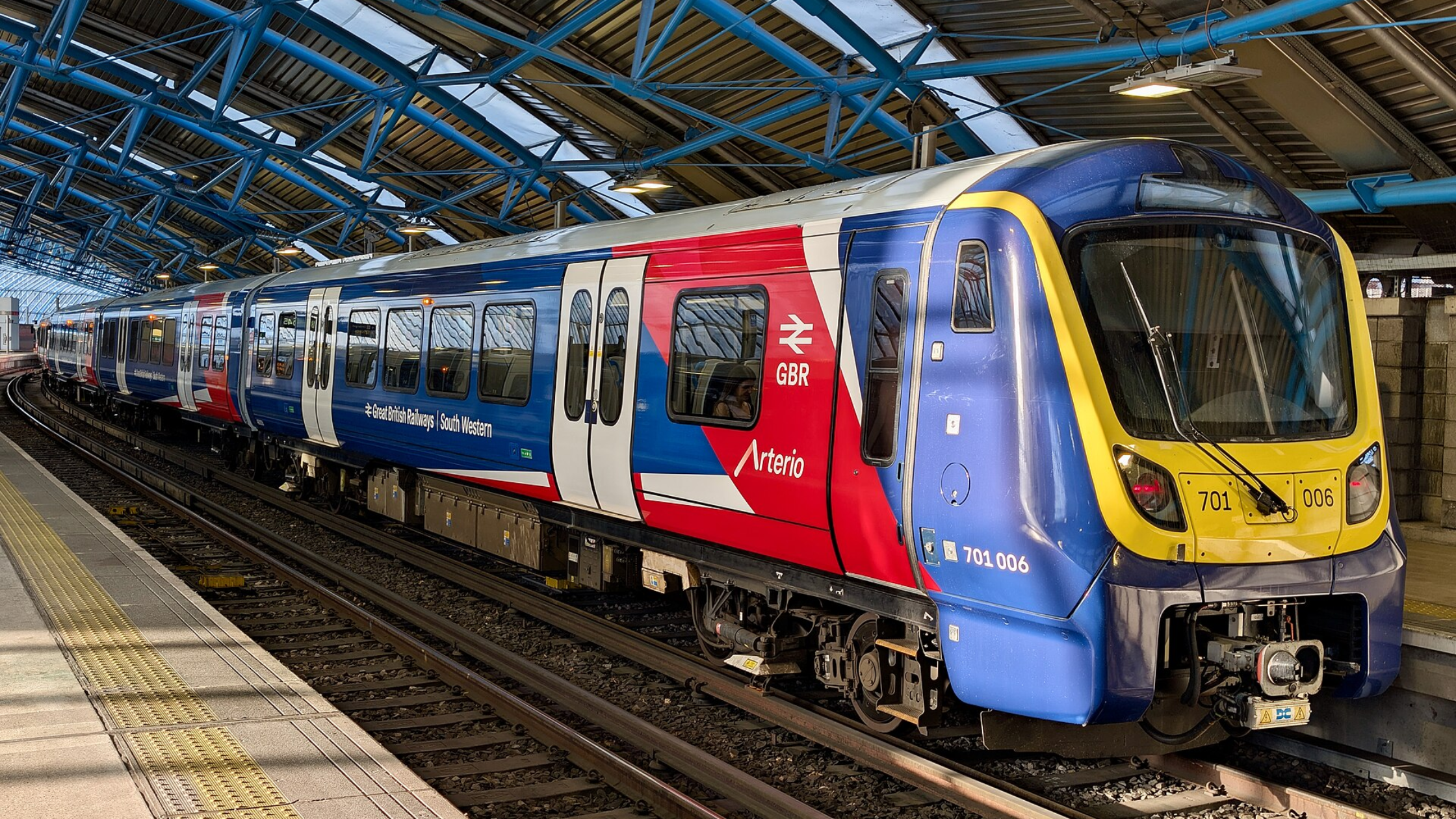
Last week, the government announced that it would ‘consider’ buying and owning new rolling stock, moving away from the extortionate system of private leasing. Under that system, private rolling stock companies (ROSCOs) have paid out more than £2.5 billion in dividends to shareholders over the past decade.
The announcement made headlines at the Labour Party conference and formed part of the government’s new Rolling Stock and Infrastructure Strategy, which explained that the government will ‘consider the possibility of direct GBR ownership’ through business cases at the time of procuring new fleets. But celebrations are premature because the commitment will mean little without strong, long-lasting legal duties to back it up.
The problem is simple: governments come and go, but replacing the private leasing model will take decades. Parliament is now considering a Railways Bill that will shape the railway over that same period. This is the opportunity to establish a lasting route to public ownership—not leave it to discretionary policy. Why announce a new direction while passing up the chance to secure it in law?
All this comes as the Office for National Statistics plans to review how rolling stock leases are treated in the public accounts. That could bring the assets – and the associated loan liabilities – onto the public balance sheet, even while the trains remain privately owned. The outcome is not yet known, but this issue puts yet another question mark over the private leasing model.
There has never been a better time to make lasting legislative change. The following five steps should be taken before this chance is lost.
Five steps to secure public ownership of rolling stock
- Add a public ownership duty for rolling stock
At minimum, what the government has already promised must be written into the Bill, with duties on Great British Railways and the Secretary of State. This would require GBR to compare public ownership with leasing before procuring each new fleet, considering whole-life costs and benefits, and to choose public ownership where it offers the strongest overall outcome.[1]
Better still would be a full ‘Public Ownership of Rolling Stock’ Duty: a strategy to progressively increase the proportion of rolling stock that is publicly owned, backed by a requirement that every new fleet procured by GBR or GBR companies is publicly owned. Additionally, it should require GBR to assess opportunities for public ownership before taking out new leases, renewing or extending existing leases, or committing to major refurbishment or life extension.[2]
- Make decisions based on long-term value, not short-term savings
Whether Labour’s promise to ‘consider’ public ownership delivers anything depends on how the business cases are assessed. These must be framed by the long-term value of public investments and external socioeconomic benefits, not the kind of thinking that is based on short-term cost-cutting. Writing this into law would only help the government in their stated aim – to ‘consider whole-life and whole-system costs and value’ when making decisions on procuring new rolling stock. It would also address one of the weakest points of the Bill, which is currently held back by a cost-efficiency duty that does not consider value or benefits.[3]
The best solution is to amend Clause 18’s General Duties, replacing the cost-efficiency duty of 18(2)(f) with a duty to ‘take into account the need to secure long-term value from public expenditure on railways and railway services, having regard to whole-life and whole-system costs and benefits.‘ This phrasing would reflect what the government has already said in its new rolling stock strategy and apply it across all railway spending, including decisions about buying new trains.
- Give GBR explicit powers to own and manage rolling stock
If ministers are serious about public ownership, the Bill should give it an explicit place in GBR’s remit. That means making ‘acquiring, owning and managing rolling stock’ a statutory function, alongside running trains and managing infrastructure (Clause 3). A further amendment should make clear that GBR can establish a publicly owned rolling stock company to deliver that function. Together, these changes would give GBR a clear statutory basis for putting public ownership into practice
- Rethink competition duties and the regulator’s role
Competition rules are one of the thorniest parts of this transition. The Bill should make clear that the rail regulator’s duties to regulate and promote competition must not stand in the way of increasing public ownership of trains. Amendments should be considered to change those duties and give the Office of Rail and Road (ORR) an explicit role in supporting the transition.[4] Ministers should also examine whether subsidy-control rules need changes to support public investment.
The ORR should be tasked with monitoring progress towards public ownership and whether rolling-stock spending delivers maximum long-term value for the public. The Bill should also require GBR to publish lease expiry dates, key contractual terms and breakdowns of costs. Public money should not disappear into contracts the public cannot scrutinise. The need for safeguards is hardly new: in December 2025, the ORR concluded that the competitive market is not functioning properly and continues to require its 2009 Transparency Order. [5] Sixteen years on, the market still cannot be trusted to work without those safeguards.
- Stop the Bill reinforcing the private leasing model
The only place that rolling stock appears in the Bill is Clause 95, which gives the Secretary of State powers to ratify and implement the Luxembourg Rail Protocol to the Cape Town Convention.[6] The Protocol aims to reduce private-sector financing costs by strengthening ROSCOs’ and lenders’ rights to recover trains or money on default, including through cross-border enforcement. Though this does not directly prevent public ownership, it could raise the cost, litigation risk and practical barriers to nationalisation and entrench the ROSCOs’ market power. It also worsens the ‘chilling effect’: where public authorities know that policy changes and market interventions into ROSCO assets could trigger stronger legal claims.
The government is unable to claim any financial benefits from implementing the Protocol, and even Eversholt, one of the private rolling stock companies, has spoken out against it, warning it will only increase costs.[7] It is also an undeniable failure on the international stage, gaining just seven parties since 2007 (by contrast, the Cape Town Aircraft Protocol gained 86 parties in this time).[8] The government would therefore be fully justified not just in removing Clause 95 from the Bill but also in withdrawing its signature from the Protocol altogether.[9]
What happens next:
The Railways Bill returns to Lords Committee stage this Monday, 12 October, with Report Stage and Third Reading still to come. These remaining stages give peers a crucial opportunity to press for public ownership of rolling stock. However, winning government support is the clearest route to getting these commitments into the Bill. If Labour is serious about public ownership, now is the time to turn its promise into law, rather than leave it for another government to abandon.
Key amendments and references:
[1] Minimum amendment, putting the announced approach into law:
“Ownership and financing of new rolling stock
(1) Before procuring each new fleet of railway rolling stock for railway passenger services, Great British Railways must assess leasing, direct public ownership and other appropriate financing arrangements on a case-by-case basis.
(2) The assessment must consider whole-life and whole-system costs and value, alongside deliverability, risk allocation, operational flexibility and Great British Railways’ capability to own and manage the assets effectively.
(3) Great British Railways must choose direct public ownership where the assessment demonstrates that it offers the strongest overall outcome and must secure compliance with this section by GBR companies.
(4) The Secretary of State must have regard to the assessment when approving or funding the procurement.”
[2] Stronger amendment, including overall strategy to work towards public ownership:
“Public ownership of rolling stock
(1) The Secretary of State and Great British Railways must exercise their respective functions relating to railways and railway services so as to increase progressively the proportion of railway rolling stock used in the provision of railway passenger services that is publicly owned.
(2) Great British Railways must publish, implement and keep under review a strategy for giving effect to subsection (1).
(3) In giving effect to subsection (1), Great British Railways must—
(a) secure that new rolling stock procured for railway passenger services provided by it or a GBR company is publicly owned; and
(b) before entering into, renewing or extending a lease of existing rolling stock, or committing to its major refurbishment or life extension, assess the options for bringing that rolling stock or suitable replacement rolling stock into public ownership, including through new procurement, taking account of whole-life and whole-system costs and value and the duty under subsection (1).
(4) Great British Railways must secure compliance with subsection (3) by GBR companies and publish the assessments under subsection (3)(b), together with reasons for the resulting decisions.
(5) Great British Railways must publish an annual report on progress under this section.
(6) The Secretary of State must publish and lay before Parliament a copy of the report under subsection (5), together with a statement of the steps taken by the Secretary of State during the reporting period to give effect to subsection (1).
(7) In this section, ‘publicly owned’ means owned by the Secretary of State, the Scottish Ministers, the Welsh Ministers, Great British Railways, a local or other public authority in Great Britain, or a company wholly owned by one or more of them.”
Note: The new public ownership of rolling stock duty should be supported by other amendments that would integrate the duty throughout the Bill. These might include: the Long-Term Rail Strategy (Clause 15); the Secretary of State’s statement of objectives (Sch 2, para 2); the statement of funds available (Sch 2, para 3); and the GBR Business Plan (Sch 2, para 4).
[3] The current cost efficiency duty has already been diluted from the similar duty in Railways Act 1993 (sec 4(5C)) which required the ORR to have regard for ‘securing value for money’ from public funds.
Amendment 119, tabled to the House of Lords Committee stage by Lord Berkeley, is recommended because it seeks to swap the cost-efficiency duty in Clause 18(2)(f) with a duty to ‘secure value for money.’
[4] This may require the repeal of section 67(3ZA)(b) of the Railways Act 1993, regarding the ORR’s competition jurisdiction; and an exemption from the ORR’s duty to promote competition (Railways Bill, Clause 20), as well as other amendments. Baroness Jones of Moulsecoomb has already probed these issues in the Committee, meeting resistance from the Rail Minister (Day Three transcript, columns 435GC; 436GC; 4455GC).
[5] Office of Rail and Road, Review of the rolling stock leasing market competition remedies: Final Decision (Dec 2025). The ORR review concluded that the competition concerns of 2009 have remained unresolved and that market outcomes since 2020 suggest no change of circumstances (p 42).
[6] Baroness Jones of Moulsecoomb has given notice of her intention to oppose Clause 95. (House of Lords, Third Marshalled List (14 Sep 2026), p 104)
[7] Eversholt UK Rails Group, Written evidence on Department for Transport’s Consultation on Legislation to Implement Rail Transformation (February 2024) p 1, 3-5
[8] Since 2007, only the Democratic Republic of the Congo, Gabon, Luxembourg, Paraguay, South Africa, Spain, Sweden (and the EU in respect of its competencies) have become parties to the Luxembourg Protocol.
[9] Vienna Convention on the Law of Treaties 1969, Article 18(a), which makes clear that a State can ‘[make] its intention clear not to become a party to the treaty’, effectively withdrawing its signature (known as notification of intention not to become a party).
Leave a Reply