Last week, the government responded to a damning Transport Committee report on disabled people’s access to transport, refusing to create a national action plan for full rail accessibility, and making only a weak commitment to review the regulatory system.[1]
The report, ‘Access Denied’, had been the outcome of a two-year inquiry and extensive evidence from passengers, concluding that transport accessibility is ‘a source of national embarrassment’ and ‘must be recognised as a human right’.[2]
However, in its response, the Department for Transport (DfT) has refused to commit to work on regulatory reform– even refusing to require the Office of Rail and Road (ORR) to enforce the regulations it already has.[3] It has also refused the Committee’s key demand for a long-term national action plan ‘including metrics, actions costings and milestones’ and ‘with concrete timescales for achieving independent accessibility across the rail network’.[4] Currently, there is no integrated, national investment plan for accessibility in the UK, and this response strongly suggests that the government has no intention of creating one. In fact, accessible infrastructure investment was not even mentioned in the June Spending Review last week.
The DfT’s intention to ignore both regulatory and investment crises in rail accessibility comes after it abandoned all the previous government’s commitments for the new public body Great British Railways (GBR):
- Socioeconomic, accessibility and environment duties at the core of GBR legislation.[5]
- A single fund for integrated national investment in infrastructure.[6]
- A single National Accessible Travel Policy, to be regulated by ORR.[7]
- Disabled Persons Transport Advisory Committee (DPTAC) to be statutory advisor to GBR.[8]
- A statutory requirement on GBR to consult disabled people.[9]
- National Rail Accessibility Strategy, including public consultation.[10]
With its response to the Transport Committee, DfT has finally revealed its hand on rail accessibility, in a year when we will see all parts of the railway reformed through new primary legislation. The future of disabled people’s right to travel is in grave danger, and we may soon lose the opportunity to make any gains at all in the upcoming Railways Act and new public body Great British Railways (GBR).
There is just one more chance to stop this before the new primary legislation. The Equality and Human Rights Commission recently announced a new priority to prevent transport discrimination, set to be a major workstream until 2028.[11] We have therefore requested their urgent intervention, pointing to clear breaches of the United Nations Convention on the Rights of Persons with Disabilities (CRPD) in at least four areas:
Breach 1: Turn Up And Go – the fundamental right to spontaneous travel
Currently, the government is allowing breaches of domestic equality law on a grand scale – denying the right to ‘Turn Up And Go’ (TUAG) across the rail network. This is enabled by the rail regulator Office of Rail and Road (ORR), whose ‘Accessible Travel Policy’ requires a two-hour booking window to guarantee assistance. When deciding this regulation in 2019, ORR ignored the advice of the Equality and Human Rights Commission (EHRC) that disabled people had the ‘fundamental right to spontaneous travel’, and that the over-promotion of ‘Passenger Assist’ pre-booking should be considered in breach of equality law.[12] In the years since, we have seen further unlawful policies and practices enabled by this booking window, for example, ‘mobile staffing’ and a nationwide booking app.
The right to Turn Up And Go is clear under the UK’s Equality Act 2010, as well as UNCRPD rights to ‘Accessibility’ and ‘Independent Living’. In fact, not only is transport a civil right in itself, but it is also the means to most other rights: work, education, participation in social and cultural life, private and family life, and many others.
Breach 2: State duty to regulate according to equality and nondiscrimination principle
Currently, train operators and ORR are knowingly causing systemic breaches of the Equality Act 2010 across the railway network. This is a point we have repeatedly proven on this website, for example, a leaked document in which the train operator Govia Thameslink Railway admits it had ‘been in breach of equality law since 2010’ due to the combination of driver-only trains and unstaffed stations.[13] The current regulations, including the ORR’s ‘Accessible Travel Policy’, are flawed throughout, also denying the right to compensation when disabled people become victims of these discriminatory policies.[14] Current enforcement policies, as well as the regulations themselves, are openly at odds with the rights disabled people already hold under equality law.
The current regulatory system is therefore in major breach of the UNCRPD, which requires States to ensure all legislation, regulation and policies are ‘without discrimination of any kind on the basis of disability’, including taking ‘all appropriate measures, including legislation, to modify or abolish existing laws, regulations, customs and practices that constitute discrimination.’[15]
Breach 3: National Action Plan to full rail accessibility
The obligation for a national action plan to full rail accessibility should be considered no less than a State obligation, especially in a country as wealthy as the UK. Under international human rights law, the UK’s duty to socioeconomic rights means it must invest to the ‘maximum of its available resources’.[16] The CRPD repeatedly advises that this should be rationalised investment for the greatest possible progress in equality, and the CRPD Committee confirms this priority in multiple authoritative opinions. This meaning logically also applies in terms of the UK’s Public Sector Equality Duty, especially considering the ongoing failures to monitor and quantify progress, also strong State obligations under the CRPD.[17]
At current rates of investment, it will take one hundred years to get a fully accessible railway – with no roadmap whatsoever towards ‘step-free’ station accessibility or ‘level access’. The Department for Transport is well aware of this, having been advised by its accessible transport advisors for years that a national action plan is imperative.[18] In its response to the Transport Committee, DfT has again refused to comply with this State obligation.
Breach 4: Duty to consult disabled people on matters affecting them
Rail accessibility and ticket retail have been exempted from consultation for many years, due to concerns for the commercial confidentiality of train companies, and competition law restrictions on collaboration.[19] The previous government recognised the importance of removing private interests from this space, treating the removal of the Rail Delivery Group from all public interest roles as a priority. However, this was found to be impossible in 2022, again due to competition law restrictions.[20]
Currently, the Rail Delivery Group remains in place and has even grown in dominance. Despite being entirely unregulated by the ORR, it is developing, using public money: the Passenger Assist booking app; a network-wide trial of Welcome Points; and many new ‘digital ticketing trials’. These are all key parts of its attempts to make stealth reforms to ticket offices, which are under the remit of the Rail Delivery Group due to its dominance of the national ticket retail system. Policies such as ‘mobile staffing’, where passengers have to go to a Help Point and wait for a staff member to travel to them, are increasingly being implemented without consultation, signed off by the ORR.
All States have a strong obligation to ‘closely consult and actively involve’ disabled people in all decisions concerning them, underlined throughout the UNCRPD, as well as an accepted principle in the UK courts. Allowing the Rail Delivery Group to stay in place, playing a central role in policy development, is a severe breach of duties to consult, as well as the UNCRPD duties to ensure equality and non-discrimination throughout the regulatory system.
Urgent demands
Our first call in this emergency is to the Equality and Human Rights Commission, whose intervention may now be the only way to get duties for accessibility back into the upcoming Railways Act.
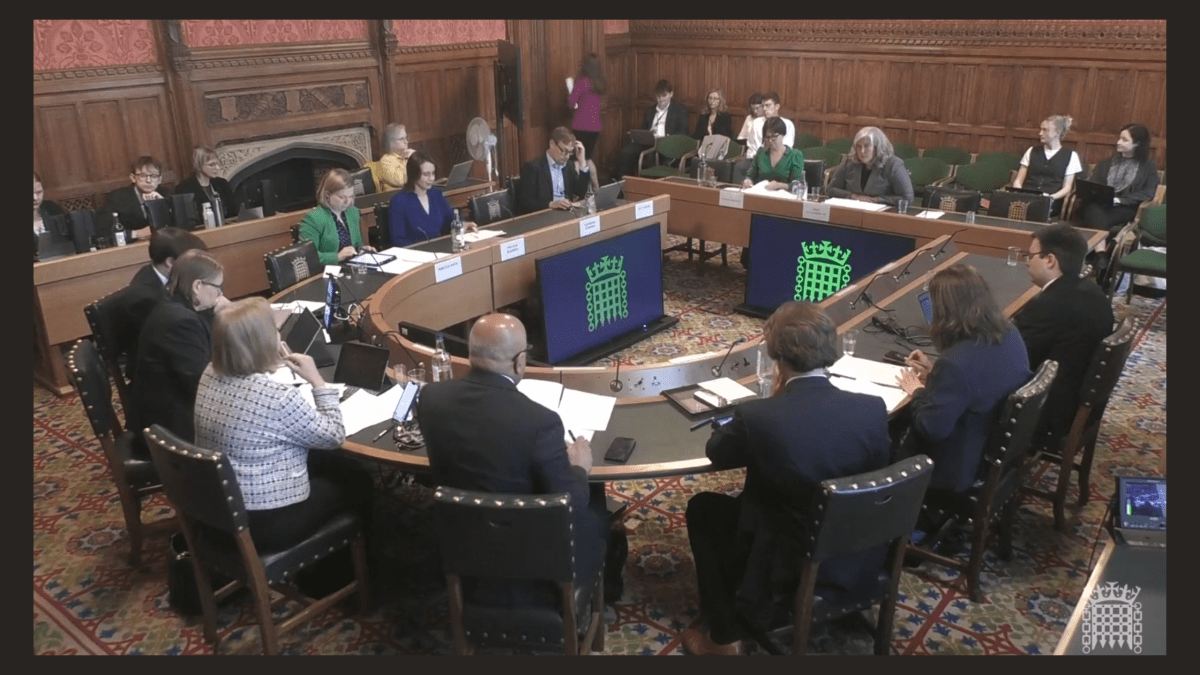
The second is to the Transport Committee, to hold a dedicated hearing as soon as possible on transport accessibility, challenging ministers on all areas of the plans for Great British Railways.
The third is to call on all charities, trade unions, transport and equality bodies to make the strongest possible challenge on this issue and get all accessibility duties back into Great British Railways. Disabled people are currently facing overwhelming attacks on their rights from all directions, so solidarity efforts should be made by all third-sector organisations representing passenger rights in transport.
References
[1] The DfT has said only that it has ‘approached the Law Commission’ on the possibility of a legislative review. However, the primary legislation for Great British Railways is being written right now, including the total reform of the Office of Rail and Road (ORR). There is also a serious red flag in its comment that regulation should be ‘efficient, proportionate and support growth.’ See Transport Committee, Response to Transport Minister (11 June 2025).
[2] Transport Committee, ‘Access Denied: MPs call for overhaul of laws, strategy and attitudes..’ (20 March 2025).
[3] House of Commons, Government response (13 June 2025); Transport Committee, Response to Transport Minister (11 June 2025).
[4] Transport Committee, Government pledges to review accessibility laws but its response to scale of failings ‘lacks urgency’ (13 June 2025).
[5] ABC, ‘Dept for Transport drops main public interest duties from GBR’ (24 Feb 2025). The public interest duties were previously commitments of the 2021 GBR White Paper, the 2022 consultation, the 2024 outcome to that consultation, and the 2024 draft rail reform bill of the previous government (Schedule 1, sec 4).
[6] The 2021 White Paper proposed that all funding pots for accessibility improvements would be consolidated into a single fund, including Access for All, the Stations Improvement Fund and the Customer and Communities Improvement Fund. (p 75).
[7] A National Accessible Travel Policy was proposed in 2022. However, this was dropped in 2024, probably due to the restrictions of competition law on train operator collaboration, such as commercial confidentiality and rules against ‘collaboration’, which is seen as an ‘anti-competitive practice’.
[8] The commitment to expand the role of DPTAC was proposed in 2022, making it into the draft rail reform legislation of 2024 (sec 11).
[9] Proposed in 2024.
[10] A proposal running from 2021 – 2024, the National Rail Accessibility Strategy consultation was on the verge of release several times in the years 2022 – 2023, being interrupted by the 2023 attempt to close every ticket office in England.
[11] Equality and Human Rights Commission, Watchdog publishes three-year plan to tackle key equality and human rights issues in Britain (Press Release: 26 March 2025)
[12] Equality and Human Rights Commission, Response to the Office of Rail and Road consultation on improving assisted travel (March 2019).
[13] ABC, Govia Thameslink Railway admits it is in breach of equality law (31 Aug 2022). ABC, Six train operators ‘in breach of legal requirements’ due to discriminatory staffing policies (22 Nov 2022).
[14] The Guardian, UK train companies could have to pay disabled passengers more compensation (18 May 2025).
[15] UNCRPD, Art 4(1)(a-i).
[16] ICESCR Art 2(1), UNCRPD Art 4(2),
[17] State obligations under Art 31 (Statistics and Data Collection); and Art 33 (National Implementation and Monitoring).
[18] Disabled Persons Transport Advisory Committee, DPTAC reference frame: working towards a fully accessible railway (14 Feb 2022).
[19] In 2024, the previous government concluded it was impossible even to make minor exemptions to the Competition Act 1998, preventing proper collaboration or co-ordination of cross-network functions. Department for Transport, Government response to GBR consultation (Feb 2024) p. 57 -59.
[20] Proven via FOI requests. See ABC Parliamentary Briefing (23 May 2025), direct download.
 abcommuters.com